The Tamesis
Hong Kong’s M+ Museum selects Pakistani-American artist Shahzia Sikander’s hand-drawn animated film 3 to 12 nautical miles (2026) for its latest commission, the M+ Facade, a massive LED embedded media screen some hundreds of feet in diameter. The work was jointly commissioned by M+ and Art Basel and will screen from March 23 to June 21.
3 to 12 nautical miles (2026) continue Sikander’s interpretation of the intricate histories of empire and commerce, linking the British Empire, the Indian subcontinent, and Qing China within a broader examination of the spread of visual language and form across these regions. The animation chronicles the decline of influence of the Mughal Empire under Akbar II, its intersection with the Qing dynasty during a period of civil strife, and the East India Company’s transformation from a commercial entity to a colonial power, culminating in the First Opium War – sparked by British opium cultivation in India, trade with China, and the contested nature of maritime borders.
Related articles
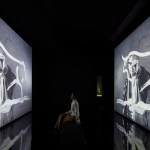
“As we celebrate our fifth year of collaboration with Art Basel and UBS, we are delighted to present a work on the M+ Facade that thoughtfully explores the interplay between empire, power and trade in a transnational historical context,” said Suhanya Raffel, Director of M+. “Shahzia Sikander’s practice is rooted in Central and South Asian miniatures, providing a unique perspective on past and present globalization through art.”
Sikander is one of the most famous living Pakistani artists, with paintings, sculptures and films spanning the globe and a prominent presence on the international stage. The tour has been held every two years since the 1990s. Born in Lahore and currently based in New York, her practice – which includes performance, painting, installation – reveals the enduring legacy of colonialism in Central and South Asia. Like her pioneering modern transformation of miniature painting, reel (1989-90), the region’s traditional art forms merged with elements of Western culture, reflecting a fraught migration of bodies and beliefs.
“It’s incredibly rewarding to see Shahzia Sikander’s work transforming the M+ façade and integrating contemporary art into the urban space,” said Angelle Siyang-Le, Hong Kong Director of Art Basel. “It invites viewers to pause and consider pressing global themes in an increasingly connected world.”
Sikander briefly appeared in the news in 2024 when her monumental sculpture at the University of Houston witness (2023) was attacked by anti-abortion groups for, in their words, promoting “Satan imagery.” The sculpture was beheaded by vandals and Sikander refused to restore it.