The Tamesis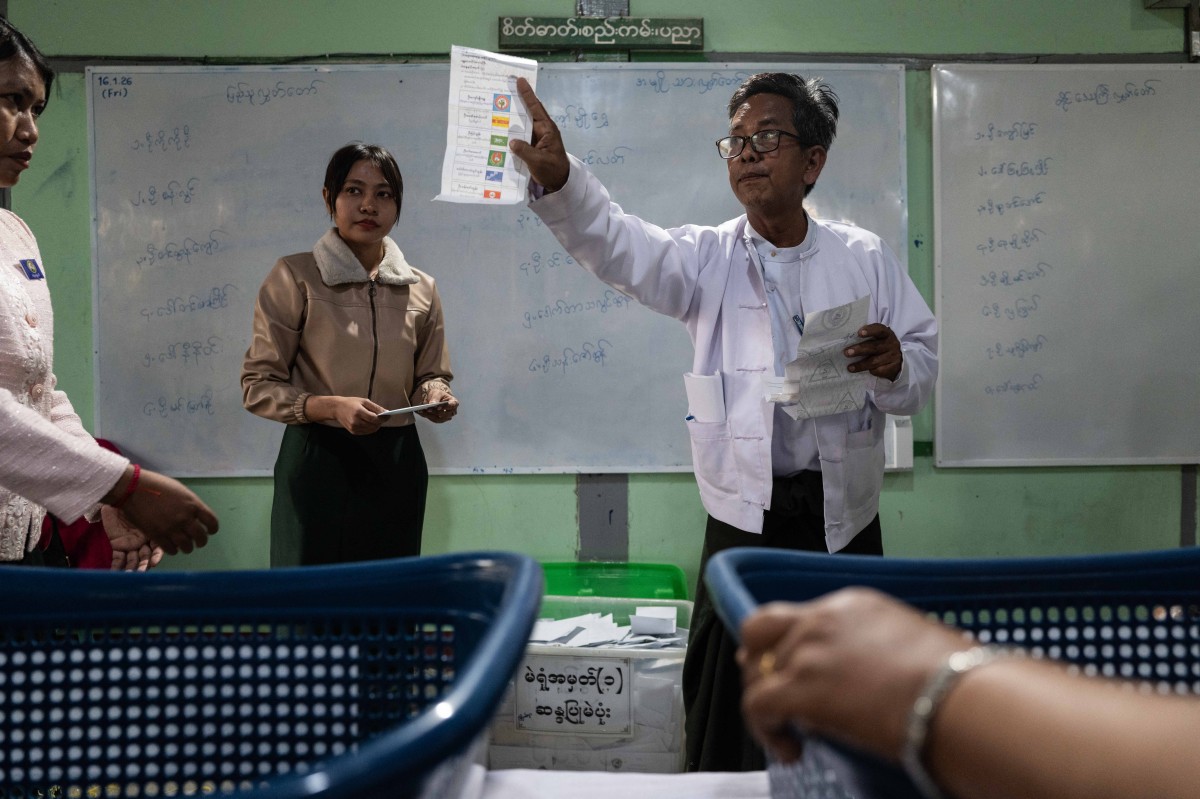
January 27, 2026
Hongkong – Myanmar held its third and final round of multi-party democratic elections on Sunday, with the military junta saying it needed people’s approval rather than the international community’s stance.
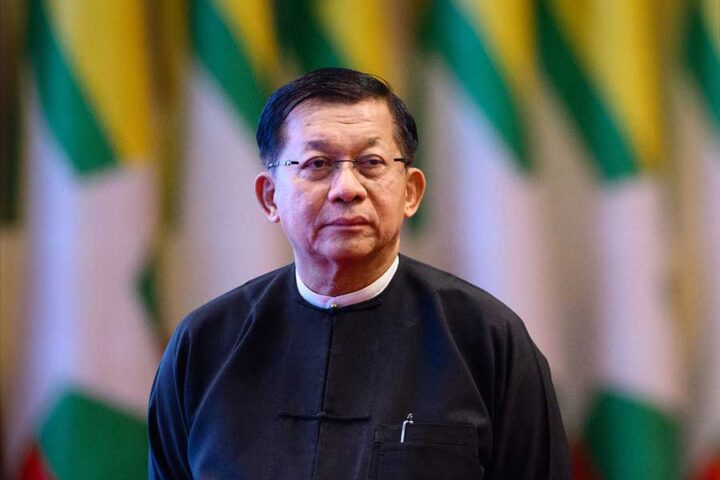
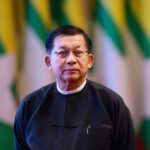
“The people’s vote is the endorsement we need,” said Senior General Min Aung Hlaing, the current junta leader.
Min Aung Hlaing said in a video broadcast on Myanmar TV that regardless of whether the military government recognizes the election results, it does not understand the views of the international community.
Polling stations in about 60 townships opened on Sunday for people to vote in the country’s first general election since November 2020.
“This is the path chosen by the people,” Min Aung Hlaing told reporters in response to a question from AFP.
“The people of Myanmar can support whoever they want to support,” he said.
The first phase was conducted in 102 towns on December 28, and the second phase was conducted in 100 towns on January 11, with voter turnout rates of 52.13% and 55.59% respectively. The number of eligible voters exceeds 24.22 million.
The election will select elected members of the Lok Sabha (lower house), Lok Sabha (upper house) and state and regional assemblies from around 5,000 candidates from 57 political parties.
Of these, 6 political parties are contesting at the national level and 51 parties are contesting at the state and regional levels.
According to preliminary vote counting results released by local media, the Federal Solidarity and Development Party has achieved a strong lead in the first two stages.
The military said earlier that a new government would be formed through parliament in April.
This election is also Myanmar’s first since the military overthrew the democratically elected government led by Aung San Suu Kyi on February 1, 2021 and seized power.
Bao Zhipeng, an assistant researcher at the Institute of Ethnology and Anthropology of the Chinese Academy of Social Sciences, said, “It is widely expected that the Federal Consolidation Democratic Party, which is supported by the military, will obtain about 80% to 90% of the parliamentary seats.”
However, Bao said the situation in Myanmar is expected to remain unstable as clashes between opposition groups and the military intensify.
deescalate tensions
Meanwhile, with the Association of Southeast Asian Nations foreign ministers’ retreat set to be held in the Philippines, which holds ASEAN’s rotating chair, on Wednesday and Thursday, Bao said ASEAN may continue to advance the five-point consensus, known as the Myanmar peace plan, to ease tensions despite member states’ different attitudes.
Philippine Foreign Minister Teresa Lazaro, ASEAN’s special envoy for Myanmar, told Reuters in an interview on Thursday that the ASEAN chair wanted to engage with more Myanmar groups but did not support the vote.
Malaysian Foreign Ministry Secretary-General Amran Mohamed Shin told a media briefing on Friday that Myanmar’s election will be one of the main issues discussed at the upcoming meeting.
Xinhua News Agency and related agencies contributed to this report.