The Tamesis
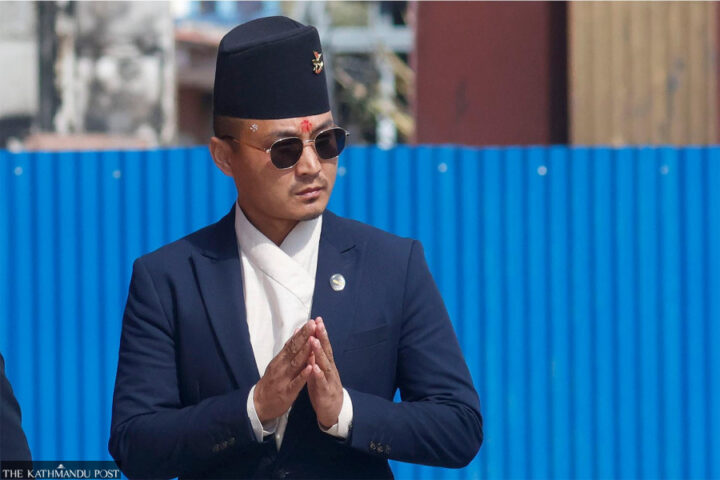
kathmandu – As the country approaches parliamentary elections on March 5, politics is no longer the exclusive domain of party cadres and career politicians. Business leaders, journalists, actors, social media influencers and sports figures have entered the political arena, making the upcoming polls a diverse and unpredictable race.
The snap polls organized by the civilian government attracted a wide range of new participants in the wake of last September’s deadly Gen Z anti-corruption uprising that killed 77 people and toppled the powerful Congress-Marxist-Leninist coalition government.
Businessman Birendra Basnet founded a political party but did not participate in the elections himself. Actress Rima Bishwakarma, journalist Rishi Dhamala and his wife actress Eliza Gautam also joined the fray. The list of new entrants continues to grow.
From journalist Jagdish Karel, who entered politics after serving as communications minister in the interim government, to former energy minister and Nepal Electricity Authority chief Kurman Ghising, to Magsaysay Award winner Mahabir Pant, now interim education minister in the interim government, the range of newcomers is staggering. Social media influencers, singers and sports personalities have also joined the race, a sign of the growing influence of politics in Nepali society.
Why did politics begin to attract individuals from all walks of life, and why did so many people feel more capable than the existing political leadership? Are there any specific qualifications required to enter politics, or does success in other fields also guarantee political success? After all, why has Nepali society become so deeply politicized?
Observers say Nepal’s over-politicization is not only the result of politicians’ increasingly corrupt behavior and failure to deliver on their promises, but also reflects a system in which survival, development and social mobility are often tied to political patronage.
As a result, even social and economic issues are viewed through a political lens, leading to highly polarized but often dysfunctional societies, they say.
Do people who excel in their fields really need to go into politics to contribute to society, or can they serve the country more effectively by strengthening areas in which they already excel?
Political science professor Sucheta Pyakuryal describes the current trend as a “bubble created by social media.” At the same time, she referred to the participation and competition theory proposed by American political scientist Robert A. Dahl in his 1971 book “Polyarchy” and believed that the increase in political participation and competition is a positive signal for any democratic country.
However, she added, the way nearly every industry is politicized today is driven by a desire to seize power and act as influence brokers. She believes that Nepali politics is no longer guided by ideology but moves forward through bargaining and haggling over positions.
“The purpose of politics is to develop policies that solve social problems,” Picurial told The Washington Post. “However, in recent years, the way politics has been glamorized has also attracted people from across the spectrum who are drawn more to spectacle than substance.”
In her view, the rise of the National People’s Party (RSP) in the last parliamentary elections, and the way its leaders have presented themselves loudly and confidently in and outside parliament, may encourage others to imagine themselves in a similar position and become attracted to politics.
Rima Bishwakarma, who entered politics through Ghising’s Ujaro Nepali Party (UNP) and later became the RSP’s proportional representation candidate after a brief merger between the two parties, made her point.
Bishwakarma does not claim to be a better leader but says she is determined to take risks for meaningful political progress.
“We are fully aware of what not to do and we are determined not to repeat the mistakes of failed leaders. This ensures accountability, builds confidence and paves the way for meaningful change,” she said.
She believes that over the past 30 years, the political landscape has largely stagnated and failed to evolve in a way that effectively addresses the challenges facing the public.
“Nepalese politics is more focused on winning elections than solving long-term problems. It relies on vote banks,” Bishwakarma said. “I’ve been a victim of this myself and am deeply frustrated by this political practice that never changes.”
She said the Gen Z movement sparked the change she wanted to see, and she decided to become a voice for the voiceless and challenge the concentration of power among a handful of conservative leaders.
Political analyst and Washington Post columnist CK Lal said there is no harm in doing so if people from all walks of life feel they can contribute to society by participating in politics. Lal says it’s unfair to assume that people from different fields have vested interests.
Lal said the politicization of Nepali society mainly started after the abolition of the monarchy and gained momentum with the first constituency assembly elections in 2015 and the subsequent promulgation of the constitution.
“This trend will continue for a few more years, until those who enter politics laterally without understanding its basic nuances will either adapt or drop out,” Lal told the Washington Post. “Before, politics had a sense of mission. Today, low costs of entry and high costs of exit are encouraging people from different fields to join.”
But when in a developing country like Nepal, people show greater interest in politics than other professions, what impact does this have on society?
Barshaman Pun, a former Maoist center leader who is now affiliated with the Nepal Communist Party, a pre-election amalgam of left-wing parties and groups, discussed issues related to the Gen Z movement in an unpublished interview with The Washington Post in October.
Pun said that after the Gen Z movement, the country had been without a government until a few days before the Karki-led government was formed. He noted that during that period, they had the opportunity to understand the consequences of extreme politicization of society.
“We have politicized society to such an extent that there is no space for independents to stand up and publicly call out and objectively address what is happening in the country,” Ban said.
Picurial also warned that the current wave of politicization has turned leaders into commodities and voters into consumers, a trend whose long-term consequences will ultimately fall on society itself.