The Tamesis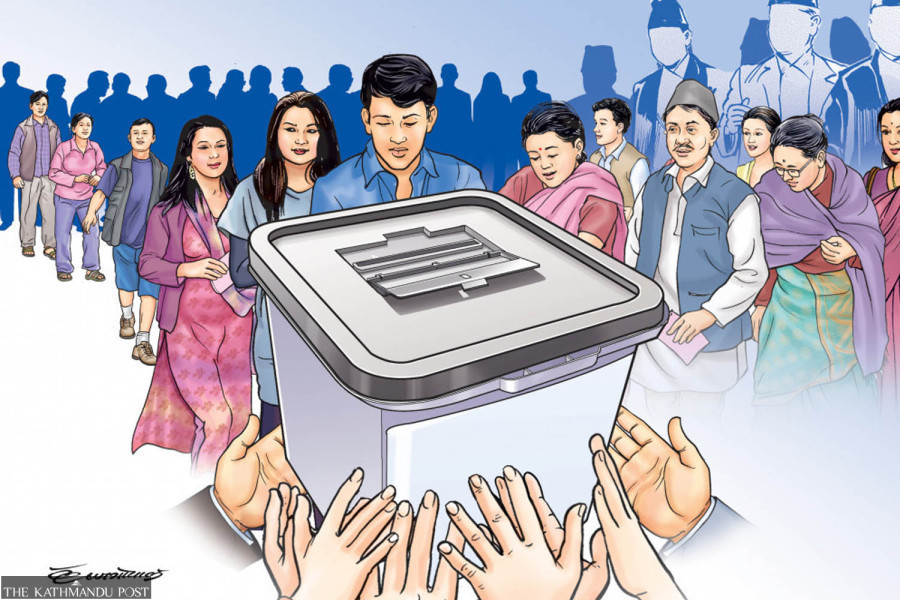
kathmandu – A total of 3,406 candidates nationwide have submitted nominations for the March 5 House of Representatives elections. Of these, 2,263 belong to a political party and 1,143 are running as independents.
One of the main demands of the Gen Z movement in September was a generational shift in politics. Many voters are curious about the age groups nominated by political parties. However, looking at the candidate slate, older candidates still dominate the political landscape.
At the same time, the electorate is largely young. According to the 2021 census, youth constitute 42.5% of Nepal’s population. The National Youth Policy 2015 defines youth as persons between 16 and 40 years of age. Among the total population of 29,164,578, the youth population is 12,412,173. It increased from 40.35% in 2011 to 42.56% in 2021.
The Election Commission reported that 18,903,689 voters were registered for the House of Representatives elections. Among them, 52% are aged between 18-40 years old. Although the youth category starts at 16 years old, according to the constitution, only those 18 years and above are eligible to vote.
Of the 3,406 candidates, 1,056 are aged 25-40, 1,925 are aged 41-60, and 425 are aged 60 and above.
Older candidates dominate traditional parties
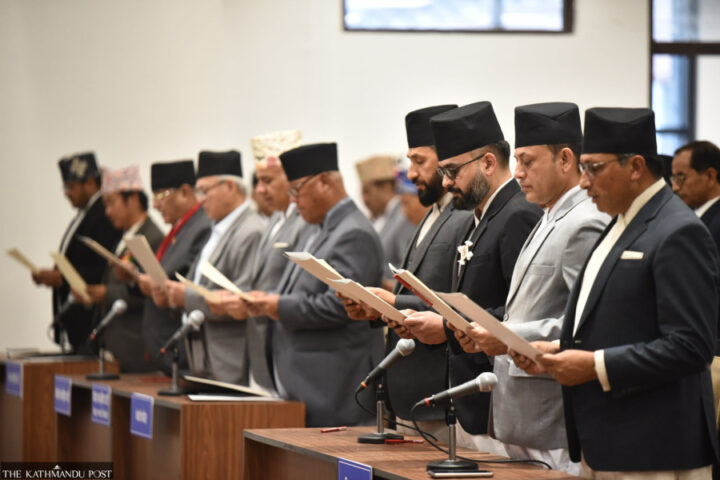
Despite the emergence of the Gen Z movement, established political parties have shown little generational shift. Political parties such as the Nepali Congress, the CPN-UML and the Communist Party of Nepal appear to be giving priority to older candidates while distributing votes.
Of the Congress party’s 165 candidates, only seven are under the age of 40. The youngest is 32-year-old Yogesh Gauchan Thakali from Mustang, while 33-year-old Sachin Timalsena from Kathmandu 4 is contesting. Nearly a third of the Congress candidates (55) are above 60 years of age, with the oldest among them being 77-year-old Tek Prasad Gurung from Chitwan-3. The Congress has 32 candidates aged 40-50 years and 71 candidates aged 50-60 years.
UML shows a similar pattern. Of the 164 candidates, 54 (about 33%) are over 60 years old. The youngest UML candidate is 27-year-old Amanish Kumar Yadav from Sarlahi-4, while the eldest is 78-year-old Jalim Miya Mansuri from Parsa-4. Only 12 UML candidates were under 40 years old, 32 candidates were between 40-50 years old, and 66 candidates were between 50-60 years old.
Of the 164 NCP candidates, only 13 are below 40 years of age. The youngest is 27-year-old Ajay Kushwaha from Bara-4. The eldest is Mahendra Rai Yadav, 88, from Sarlahi-2. 39 NPC candidates are over 60 years old.
Of the 94 candidates of the People’s Party of Nepal (JSP-N), 11 are below 40 years old, 39 are between 40-50 years old, 27 are between 50-60 years old and 17 are above 60 years old.
Youth representatives in new political parties
New political parties, including the Rastriya Swatantra Party (RSP), have given more important roles to young candidates. Nearly 40% of the RSP’s 163 candidates are under the age of 40, including 12 under the age of 30 and 53 between the ages of 30-40. In addition, 50 candidates are aged between 40 and 50 years old, 46 candidates are aged between 50 and 60 years old, and only three candidates are aged above 60 years. In Ujyalo Nepal Party, 40 candidates out of 105 candidates are under 40 years old, 29 candidates are between 40-50 years old, 27 candidates are between 50-60 years old and 9 are above 60 years old.
In the Sham Sankriti Party led by Harka Sampang, 35 of the 109 candidates are under the age of 40. The youngest candidate is 26-year-old Pankaj Kumar Thakur from Siraha-4. Six candidates are above 60 years of age, the eldest among them is 74-year-old Man Bahadur Bairag from Bardiya-2.
The gradual transformation of political parties
Observers say it is unrealistic to completely exclude older politicians. “The Gen Z movement emerged because those in power failed to deliver on their promises. Decisions depend on circumstances and psychology,” said observer Jhalak Subedi. “But that does not mean that older candidates should be banned. There has been some shift, although not completely. Parties have introduced new faces as candidates, which is positive. The UML is still showing some resistance, but the Congress and NCP are showing significant changes.”
Demographer Bidhan Acharya points out the need for mature representation. “Politics is about policy making. Age-based representation quotas are not always appropriate. Transformation is necessary but young people should focus on policy implementation rather than strict representation,” he said.
Political observer Sucheta Pyakurel is cautiously optimistic. “The movement has not brought immediate change, the changes needed have not quite happened yet. But the parties have made efforts,” she said, citing Congress as an example of compromising on candidate selection to allow for some new entrants.
Sociologist Sanjeev Uppreti added that the number of recurring faces has declined. “Compared to previous elections, candidates across all age groups are more equitable. This is a positive outcome of the Gen Z movement. While it is not yet complete, this shift cannot be ignored,” he said.