The Tamesis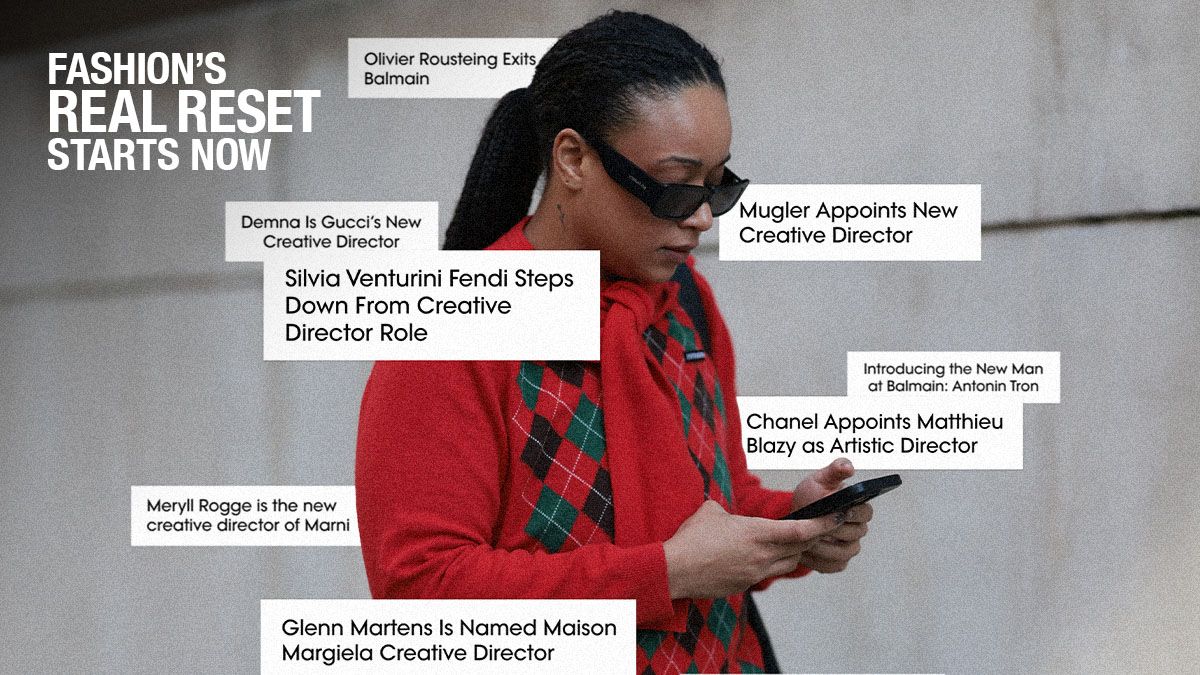
The move appears to have triggered a chain reaction among luxury brand executives. As sales slowed, executives and creative directors across the industry looked for new directions, and a domino effect ensued until nearly every major brand, including Chanel, Dior, Gucci, Balenciaga, Givenchy, Loewe, Alexander McQueen, Valentino, Bottega Veneta, Maison Margiela, Fendi and Mani, had a changing of the guard.
“The reason for the major creative adjustment is that many soft luxury brands have suffered setbacks at the same time, Chinese consumers have fallen into trouble, and Western consumers have woken up from the post-COVID-19 excitement,” said Luca Solca, an analyst at Bernstein. “The improvement in the global luxury demand environment will eventually normalize the creative drain.” He believes that according to this logic, when the luxury market sales improve, the reset may be over. “When does a company stop changing CEOs? When does it finally work. The same goes for creative directors.”
If this is true, we may be stabilizing in the short term. According to Bain & Company forecasts, the slowdown in the luxury goods industry will end in 2026 as the industry returns to growth, which may mean the end of the reset. In the next 10 years, the personal luxury goods market is likely to grow by 4-6% annually, reaching 525 billion to 625 billion euros, while overall luxury spending may reach 2.2 trillion to 2.7 trillion euros.
This is a compelling argument. But others believe the intense scrutiny placed on creative directors during this period has inevitably increased pressures too high, causing designers to play it safe and undermining the creativity needed to stimulate demand for fashion. While finances and a creative reset may be inextricably linked, insiders agree there are other factors at play.
Federica Levato, senior partner at Bain & Company, said: “A modest recovery in the market may ease the pressure on luxury brands, but it is unlikely to slow or stop the creative reset underway across the industry. Our outlook has always emphasized that growth alone will not restore people’s demand.” “Brands need to re-energize creativity and re-establish quality and purpose as non-negotiable pillars that stimulate long-term demand. This is a multi-year agenda, not a cycle that ends once demand improves. In short, market recovery buys time, but it does not eliminate the strategic need to reaffirm uniqueness and cultural relevance.”
applying too much pressure
The role of designers has changed significantly over the past decade, with creative directors taking on new responsibilities outside of the design studio and taking responsibility for brand image and immediate sales results.
“Money is definitely part of it, but because the role of the designer has become so complex, there’s also a creative reset,” says brand strategist and consultant Richard Gray. “They are expected to be creative, commercial, communicative and strategic all at once, making alignment with the CEO more difficult than ever. There is now pressure to quickly rethink creative direction as creativity is asked to solve deeper business problems,” he said.