The Tamesis
January 20, 2026
Manila – Philippine President Ferdinand Marcos Jr. faces impeachment over allegations ranging from the handling of former President Rodrigo Duterte’s referral to the International Criminal Court (ICC) to allegations of kickbacks related to flood control projects.
While the first impeachment charge against Marcos is widely expected to fail, analysts say it is politically significant because it could weaken Marcos’ standing.
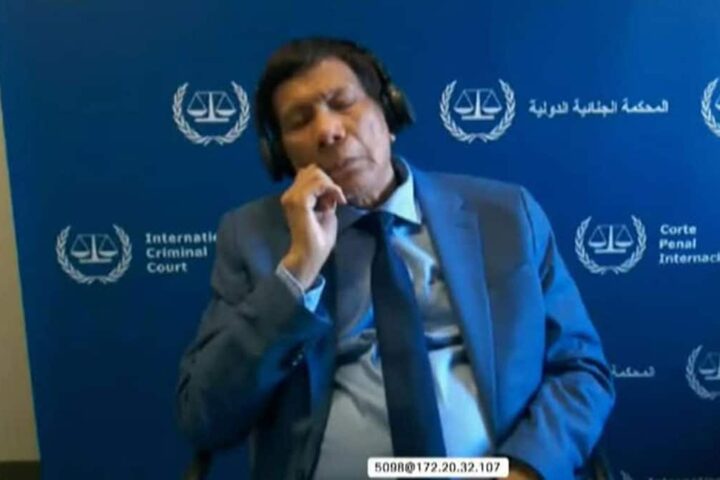
The complaint, filed on January 19 by lawyer Andre de Jesus and backed by lawmaker Jett Nisay, accuses Mr. Marcos of violating the constitution, committing corruption and betraying the public trust. Among the accusations is that the president authorized the so-called “kidnapping” of Mr. Duterte, allowing him to be arrested without due process in March 2025 in connection with International Criminal Court proceedings.
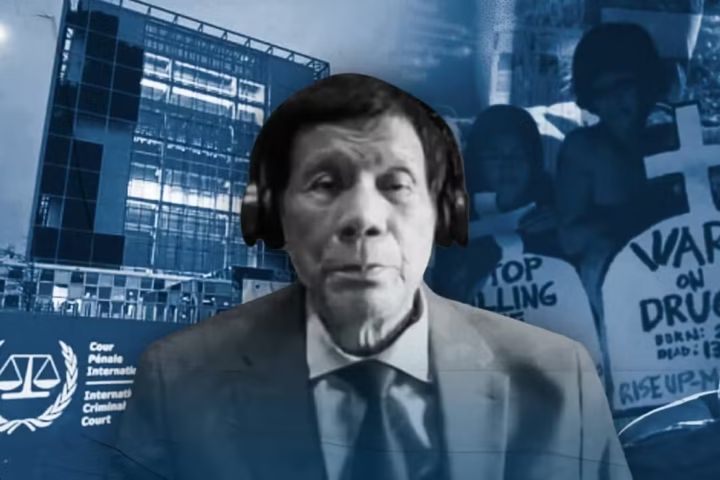
Duterte, who was president from 2016 to 2022, has been accused of crimes against humanity over killings during his controversial war on drugs.
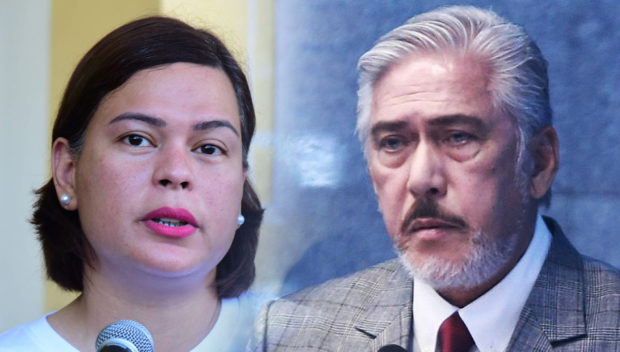
Mr. De Jesus also called Mr. Marcos a “drug addict” in the complaint — an allegation previously leveled by his predecessor and his daughter, Vice President Sara Duterte.
The complaint also alleges that Mr. Marcos violated the public trust by failing to veto the 2023-2026 budget provision, which it said was unconstitutional.
The report further accuses him of benefiting from so-called “ghost” flood defense projects and setting up a government task force to investigate the infrastructure mess in an attempt to protect political allies.
However, legal experts say the complaint is unlikely to pass even a preliminary review by the House of Representatives.
Attorney Michael Yusingco, a senior fellow at the Ateneo Policy Center in Manila, noted that the impeachment charges do not contain concrete evidence.
“In this impeachment charge, the allegations are pure speculation, pure opinion. I don’t think the allegations are supported by strong evidence because the speculations are based on news reports,” Mr Yusinko told The Straits Times.
He contrasted the complaint with the impeachment of former President Joseph Estrada in 2000, which was based on specific allegations of corruption, including profiting from illegal gambling and benefiting from insider trading, and was supported by testimony and documentary evidence.
The House impeached Estrada, but his Senate trial stalled when senators voted to block the release of a key piece of evidence, sparking massive street protests that forced him to step down in January 2001.
“You have to show in your complaint that if we don’t remove the president, our entire system of government will be undermined,” Yusinko said. “That narrative does not exist here.”
Mr. Marcos, who has denied wrongdoing and sought to take a tougher stance on corruption, ordered an investigation in June into the flood infrastructure scandal that has so far implicated lawmakers, contractors and senior officials.
Among those now embroiled in the scandal is Mr. Nisei, who supports impeachment. The MP, a construction contractor, was one of eight MPs referred to the Ombudsman’s Office in 2025 over possible corruption charges.
Mr. Nisei also supported the now-dismissed impeachment complaint against Vice President Duterte.
The House of Representatives impeached Ms. Duterte in February 2025, but the impeachment case did not proceed to the Senate after she challenged the proceedings at the Supreme Court, which subsequently ruled that her impeachment complaint was procedurally flawed.
Her critics say they plan to refile their complaint in February.
Political analysts say the impeachment of Marcos is best understood as less of a serious attempt to oust him and more a reflection of intensified factionalism after the collapse of the Marcos-Duterte alliance.
Dr. Aris Arugai, a political scientist at the Yusof Issa Institute of Southeast Asian Studies in Singapore, said the move was “not surprising” and noted that impeachment talk had been circulating within Duterte’s camp for months.
“It almost reads like a personal vendetta wrapped up in a so-called attempt at accountability, which is very fishy,” he said, adding that impeachment is an elaborate accountability mechanism but is increasingly being repurposed as a political weapon in the race between Marcos and Duterte.
Dr Arugai said complaints faced significant difficulties even before evidentiary issues were considered. Mr. Marcos still holds a large majority in the House of Representatives, so impeachment is unlikely to pass.
Even if the proposal passes the House, it would require a two-thirds vote in the Senate to pass complaints, a threshold that Duterte’s group does not have.
Still, analysts warn that even if it fails procedurally, the application could come with political costs.
Mr Yusinko of the Ateneo Policy Center said the complaint was likely to add to public frustration that the government was not acting decisively enough against those involved in infrastructure-related corruption.
“The real issue is the perception … that he is protecting some parts of the flood control corruption scheme,” he said.
Dr. Arugay agreed, saying the move may not have been aimed at ousting Marcos but at weakening his political standing. “The logic of the Duterte camp is, ‘If we make Marcos Jr. weak, then Sara Duterte will become strong’.”
Mr. Marcos was elected to a six-year term in 2022 and is constitutionally barred from seeking re-election in 2028. Ms. Duterte is seen as a strong contender for the 2028 presidential election.
Malacañang, the presidential palace, issued a statement on January 19, acknowledging that filing an impeachment complaint is protected by the Constitution, but expressed confidence that legislators will act with “honesty, integrity and devotion to the rule of law.”
For Marcos, the complaint comes at an awkward time for the Philippines, which will chair ASEAN in 2026.
While analysts do not expect the impeachment move to seriously weaken his international standing, they say it could raise troubling questions and reinforce a narrative of political instability at home as Manila seeks stability and leadership.
“The impeachment has destroyed what little political capital he has left,” Dr Arugai said.