The Tamesis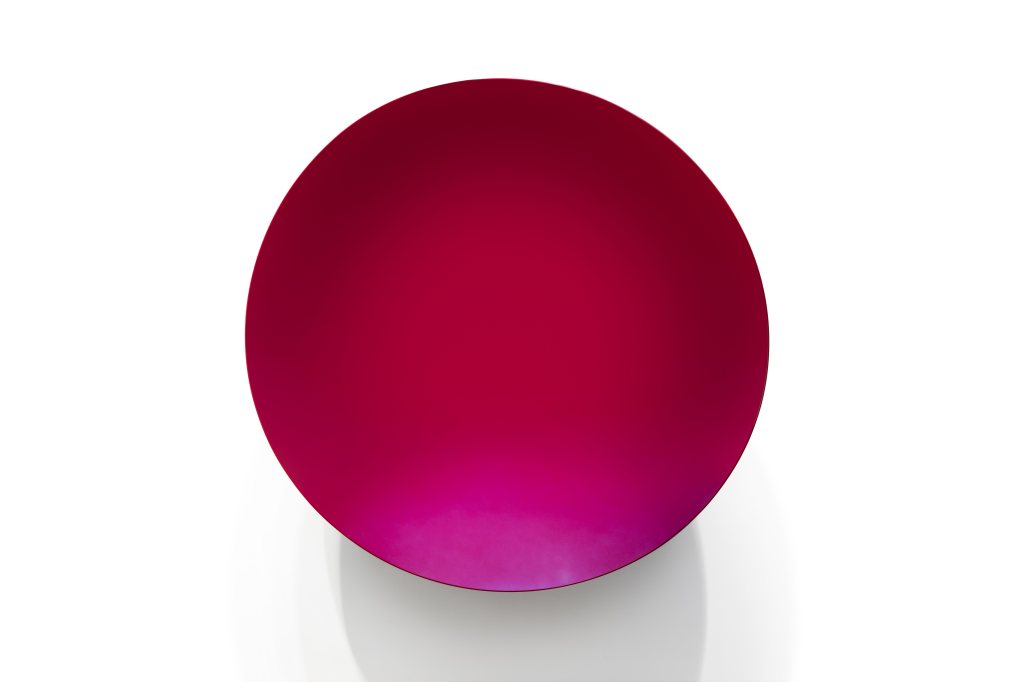
Sotheby’s has announced that it will hold its second auction in Saudi Arabia on January 31, 2026. The auction house held the kingdom’s first international auction in February, selling art, luxury goods and sports memorabilia in the ultra-gentrified town of Diriyah, the original home of the Saudi royal family. It is just a stone’s throw from the capital Riyadh. Next year’s sale – called “Origins II” – will be held at the same location and feature only art, though Sotheby’s has tweaked its strategy to try to inject more nitro into the bidding.
Its first sale in Saudi Arabia, known as “Origin,” sold for $17.3 million from 117 lots against a mid-estimate. However, 40 of the lots were unsold, including about half of the 28 jewelry lots and 8 of the 17 bags. The overall sell-through rate was 65.8%. Sotheby’s is the first to admit that its push into the Middle East is a fact-finding mission, at least for now. “We are on a rising star,” Edward Gibbs, chairman of the company’s Middle East and India operations, told me over lunch in Diriyah in February. Before the sale, Julian Dawes, Sotheby’s head of Impressionist and modern art in New York, said: “We are testing the waters. This is a marathon. Whatever the outcome, we will be wiser.”
Recently, Ashkan Baghestani, head of Sotheby’s contemporary art day sales, said: art news Saudi Arabia’s first auction was “exploratory in many ways”.
“This is a new market for us and as we continue to listen closely to our customers locally and across the region, each auction will evolve naturally – influenced by different periods, genres and sentiments,” he said. “Building on the results achieved in February, this sale focuses on art and reflects the strong interest we are seeing among collectors.”
“Origins II” will feature more than 70 works by international artists, with a focus on works by Middle Eastern artists. “The sale brings together works of art and objects from a wide range of collection categories, including ancient sculpture, 20th-century design and prints, Middle Eastern art, modern and contemporary works, Latin American art, and modern and contemporary South Asian art,” Sotheby’s said in a statement.
Headline lots by auction-tested blue-chip artists include an untitled 2005 aluminum paint sculpture by Anish Kapoor, estimated at $800,000, and works by Andy Warhol Disturbing Muse (after De Chirico) (1982) silkscreen, with a high estimate of $1.2 million. Artists Mohammed Al Saleem (Saudi Arabia), Mahmoud Sabri (Iraq) and Samia Halaby (Palestine) also participated.
Last time at Diriyah’s posh Boujari terrace, works by Middle Eastern artists were selling well. For example, Halaby’s abstract painting nearly doubled its high estimate of $200,000, while Abdulhalim Radwi’s striking untitled painting exceeded its estimate by $264,000.
Fahad Malloh, Sotheby’s director of commercial strategy and chief of staff to the CEO, said in a statement: “Returning to Saudi Arabia for our second sale in the Kingdom is truly special, especially because it is my home country. The memories of our first sale are still fresh, and we look forward to presenting a range of outstanding works to collectors and celebrating the Kingdom’s vibrant art scene.”
Sotheby’s is on a mission to expand into the Middle East. In early December, it hosted Abu Dhabi Collectors Week, a series of outdoor luxury sales events in the UAE. The sale (not including any artwork) brought in an impressive $133 million. The event was facilitated by a $1 billion deal between Sotheby’s and Abu Dhabi’s sovereign wealth fund ADQ, giving it a foothold in the region.
Related articles