The Tamesis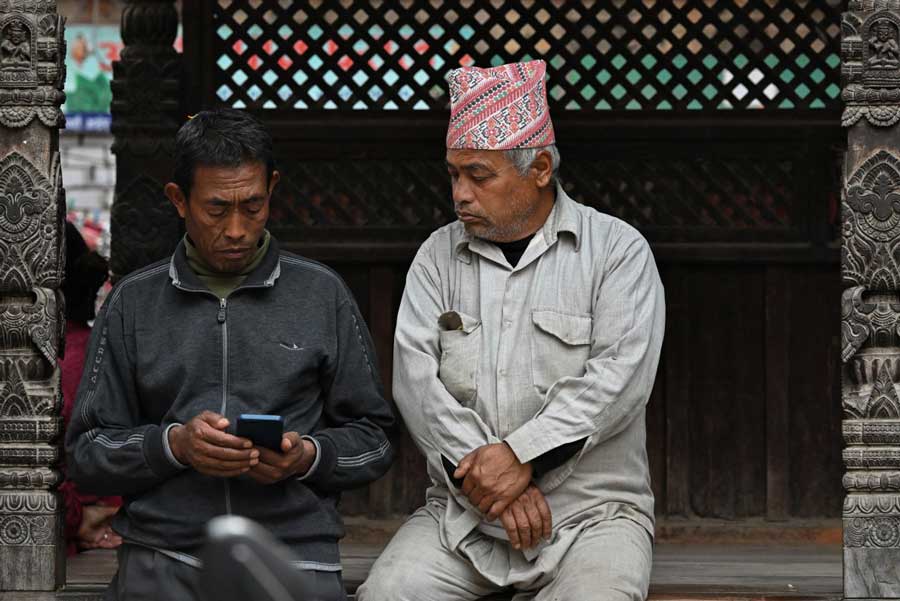
May 21, 2026
kathmandu – Prime Minister Balendra Shah’s grandiose theatrics are irritating and confusing. For reasons that are not hard to deduce, he prefers digital monologues to institutional conversations. How many speeches has he made in Parliament since his election? nothing. How many press conferences has he held? Zilchi. He refused to address the inaugural session of the Pratinidhi Congress and walked out midway through President Ramchandra Paudel’s address on policies and plans. He did not answer questions from lawmakers, instead delegating a cabinet colleague to face the House.
The newly painted ceiling of the parliament hall apparently made the Shah claustrophobic. He prefers to worship the digital territory he established as a rapper. His unceremonious departure from the Platinum Chamber during the president’s ceremonial address was not only a breach of protocol but a deliberate display of indifference. In Shah’s “dashboard democracy”, the Legislative Assembly is seen as a degenerate institution and an ancient site of political friction.
A government formed from the political ashes of executive, legislative and judicial buildings burned during the autumn protests does not see the need to value parliamentary traditions. The past is another realm for dealmakers. It now belongs to a strongman at the helm who believes in making history rather than reading it.
In the digital political landscape, the center of power has shifted from legislative bodies to servers in Silicon Valley. Public information is delivered not through chaotic parliamentary debates or scrutiny by a skeptical media, but through instant fiat, algorithmically weaponizing the enthusiasm of digital voters. By eschewing republican institutions, the Shah did not modernize communications; He is signaling a retreat into high-tech autocracy.
Algorithms are already poisoning democracy around the world. Even former US President Joe Biden once lamented that the truth was covered up by lies fabricated for power and profit. In fact, shared facts in the public domain have been replaced by partisan fervor in the information flow. Conscientious citizens are being reduced to fanatical followers and parliamentary debates are seen as a mere formality. Now governance is competing with the ephemeral alchemy of viral optics. In digital durbar, “likes and shares” have legitimacy.
Dialogue outside formal institutions also began to degrade. The aroma of overcooked, sugary milk tea lingers in the roadside stall at Prithvi Rajmarg. In the dimly lit corridors of Sanepa, Chasar, Koteshwar and even Banasthali, the whispers of party cadres continue. The old guard’s struggle for the republic had a unique texture: Rosa Luxemburg was discussed between nicotine-stained fingers over shattered glasses, district secretaries talked with dramatic solemnity about Gandhi and Mao simultaneously, and revolutionary songs blared from makeshift stages – Ek jugma ek din ekchoti auncha ulatpulat, uthalputhal, herpher lyauncha. But that day of upheaval did not come about through political agreement; It comes from Discord chat rooms and military initiatives. Nepali politics used to be tactile. The air smelled of sweat, dust and body odor. It requires physical attendance.
touch screen republic
Traditional centers of political gravity have quietly been upstaged. The physical public realm has been compressed into the glowing rectangle of a smartphone. The newly empowered Republican generation asserted its strength through digital systems. TikTok videos, the Meta Live platform, and YouTube Shorts are their arenas of activism. The chat room acquired a legitimacy once reserved for the popular mandate itself – it helped select an extra-constitutional prime minister.
Anyone with an affordable smartphone and enough anger can become a commentator. Every scandal is immediately scrutinized, every ministerial gaffe becomes a meme. A generation exhausted by the conservative entitlement found liberation in digital immediacy. This temptation is powerful because it flatters citizens and gives them the illusion of direct participation without the need for organizational discipline. One can denounce corruption while lying in bed or “overthrow” a government in between scrolls. In the republic of touch screens, anger has become the cheapest political currency without borders. Some of the Shah’s strongest supporters pay taxes in Australia, Canada, Europe and the United States.
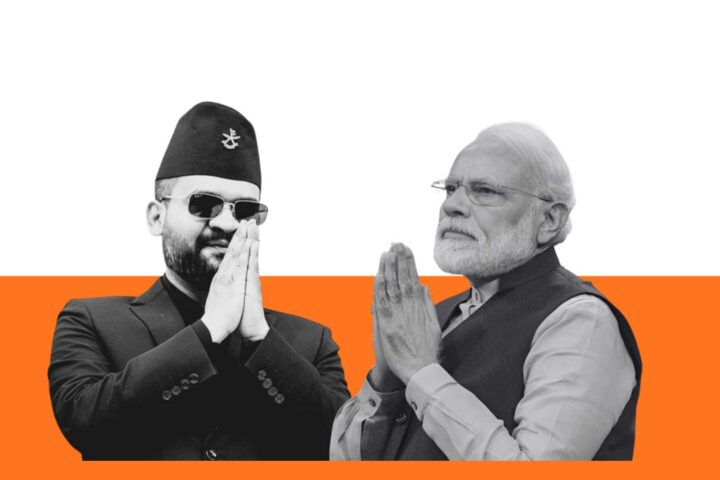
Prime Minister Shah was inspired by Indian Prime Minister Narendra Modi, who has not held a single press conference in the 12 years he has ruled the so-called largest democracy. Why deal with the media when the hot topics of the afternoon are seen as the real voice of the people? This is democratic legitimacy reduced to analysis and politics mutated into data manipulation.
While the old parties measured influence through ward committees and unions, the new political class measures relevance through impressions and follower numbers. Digital populism thrives on simplification because platforms reward emotional compression. Both TikTok and Reels are designed for excitement, requiring a villain, a betrayal, and a punchline every 15 seconds. Complex structural issues – federalism, fiscal transfers, judicial reform – cannot survive in this attention economy. Nuance died first in the viral battle.
In this way, politics becomes theatrical rather than programmatic, let alone idealistic. Competition over policy has been replaced by competition over emotions. Leaders are rewarded not based on ability, but based on performance. Sharp insults delivered on air have greater political value than negotiated policy compromises. Regardless of merit, the loudest players dominate.
This creates a dangerous asymmetry between landscape and organization. Traditional parties, despite their cynicism, have territorial depth. Their structures permeate villages and cities; they mobilize bodies, not just bandwidth. In contrast, new digital forms require no infrastructure to have visibility. An influential person can collect millions of views, but if a regime similar to the one in Myanmar comes to power, he will have a hard time gathering 50 disciplined volunteers to stand out and provoke in Bhadrakali. The Federal Republic cannot be defended by labels alone.
Algorithmic legitimacy
By omitting it, the dashboard is equally effective. It over-represents cities, connectivity and performance, while under-representing quiet, poverty and remoteness. The algorithm rewards expression, not pain. Public life becomes an ongoing performance calibrated against engagement metrics. Narcissistic politicians no longer ask: “What does the country need?” but “Where will this trend go?”
Nepal ranks among the five most narcissistic countries in the world, where the cult of personality has now been accelerated by technology. When a leader surrounded by influencers confuses online adoration with acceptability, authoritarianism doesn’t need guns and censorship: it can be achieved through live streaming, armies of fans, and networks of influence.
Institutional requirements are slow. Courts, parliaments and bureaucracies move slowly because compromise is the working principle of democracy. By contrast, digital culture celebrates immediacy, creating fertile ground for demagogues. Narcissistic leaders present themselves as the embodiment of the will of the people precisely because institutions appear cumbersome. Why negotiate when you can live stream? Why bother thinking when one can be popular?
Gone is the slow republic of tea shops and pamphlets. Smartphones are in the blood of democracy. But the digital signal is a symptom, not a diagnosis. The viral video is an alarm, not a verdict. To maintain democratic seriousness, politicians must relearn the distinction between attention and representation. People are always bigger, slower, and more contradictory than any phone can capture. The challenge facing the Republic is as much a civilizational challenge as a technological one: listen to the screen, but don’t surrender to it.
The older generation of politicians promised a “welfare state” but instead achieved a “farewell to the state”, plunging the desperate in West Asia into near-slavery. The new breed that deports them doesn’t even pretend: they tell you they don’t care. If that doesn’t make you angry enough, you’ve fallen victim to the temptation of a flashing blue screen. To paraphrase Bertolt Brecht a little: someone who still hopes “…has not yet heard the bad news.”
CK is a writer and political analyst.