The Tamesis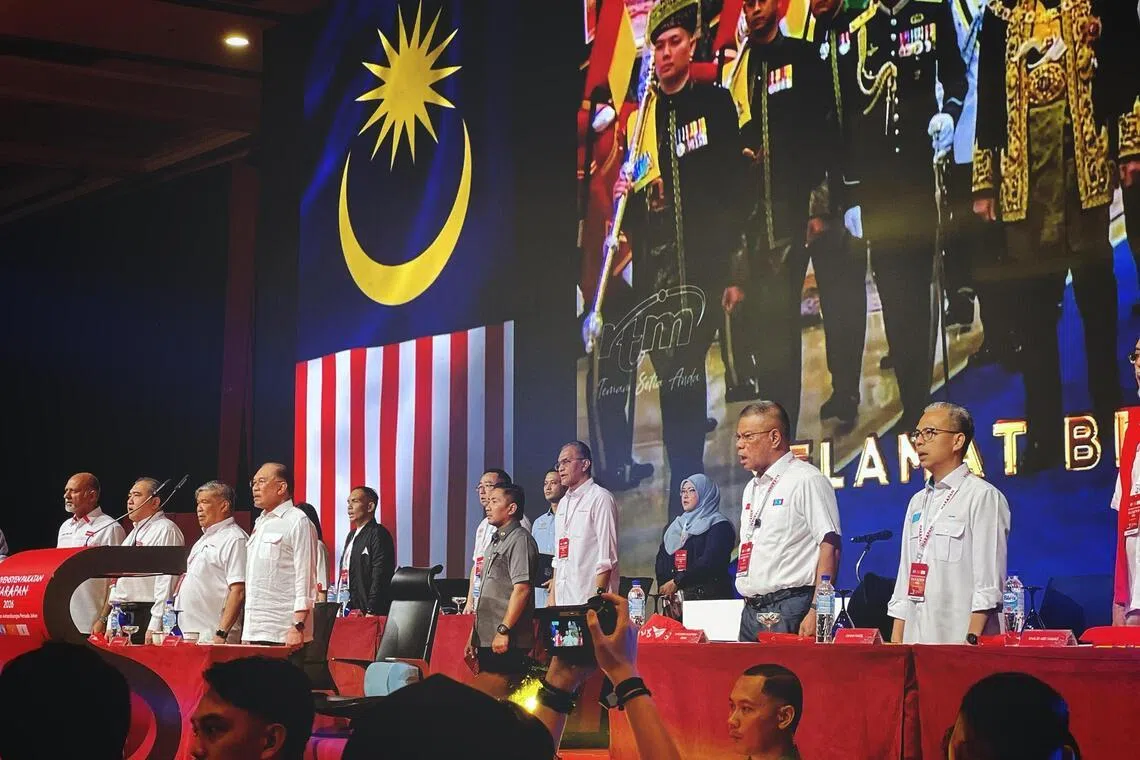
May 19, 2026
Johor Bahru – Malaysian Prime Minister Anwar Ibrahim has issued his toughest ultimatum yet to coalition partners Barisan Nasional (BN), warning their alliance will collapse May trigger an early election.
Datuk Seri Anwar’s comments highlighted the fragility of the relationship between his Pakatan Harapan (PH) and the Barisan Nasional, raising fresh doubts about the alliance’s ability to survive until the end of the current term in December 2027.
“In the short term, I will be negotiating with the PH leadership, not just in this state. But if we are treated like this, maybe the whole country will hold elections,” he said at the PH conference in Johor Bahru on May 17.
In a fiery keynote speech to thousands of delegates, he also said he would not tolerate the “threat” of Pakatan Harapan’s rivals turned partners.
Pakatan Harapan chairman Anwar is not the only one to disdain the Barisan Nasional. Other senior Pakatan Harapan leaders called for Umno to be purged of “betrayal” if Barisan Nasional continues on its path of confrontation.
DAP secretary-general Anthony Loke praised the coalition government for delivering projects such as the MRT system link, electric train services and Senai airport expansion to Johor, suggesting that decades of Barisan Nasional rule had left many promises unfulfilled.
Meanwhile, Amanah president Mohd Sabu likened the alliance to a troubled marriage where the husband’s demands were ignored. Instead of complying with the demands, he said the wife was “looking at other people’s husbands”, a remark that was interpreted as a reference to Umno’s reported contacts with opposition party Perikatan Nasional.
“It’s hard to stay together, but it’s easy to break up,” he said.
The sharp rhetoric reflected weeks of escalating tensions between the two alliances.
A crisis first arose in Negeri Sembilan, when 14 Umno MPs withdraw support In late April, Pakatan Harapan Chief Minister Aminuddin Harun took office, triggering a confrontation involving the state government and government officials.
Subsequently, Johor Barisan Nasional Chief Minister Ong Hafiz Ghazi issued a statement on May 16, stating that his alliance would contest all 56 state seats.
In response, Mr Anwar told Pakatan Harapan delegates on May 17 that Pakatan Harapan may also contest all seats in the two states.
“If (UMNO) really feels that their time is up in the states, then yes, we will start with Johor and then Negeri Sembilan and I’m thinking, maybe… we will throw it out there and let the people decide for the whole country,” Mr Anwar said.
“We don’t accept threats (in good faith). Beating? I was beaten. Jail? I’ve done that. Now threatened by a child? Oh! No way!” he said, apparently referring to the 47-year-old Johor chief minister.
Johor Pakatan Harapan chairman Aminol Huda Hassan also called on delegates to “bury” Barisan Nasional in Johor for a second time – a reference to the 2018 general election, when Pakatan Harapan briefly ended Barisan Nasional’s long-standing control of Johor.
Malaysia will hold a series of state elections ahead of the 16th general election (GE16), which must be held by February 2028. Melaka’s term will end in December 2026, Sarawak in February 2027 and Johor two months later.
But there are rumors that Johor could go to the polls before the end of 2026.
Mr Anwar told the conference that “the drums have been beaten and war has been declared”, while Mr Roque said “we have entered the ring”.
The Johor Barisan Nasional leader rejected accusations that the alliance was trying to undermine the partnership, saying it was “untrue and confusing” that the fight for all 56 seats amounted to betrayal.
In its defense, Barisan Nasional said it won a two-thirds absolute majority in Johor at the last election and that the federal power-sharing model was never extended to Johor, where Barisan Nasional governs alone.
Barisan Nasional won 40 seats in the 2022 state election, while Pakatan Harapan won 12 seats.
Barisan Nasional’s denial did not prevent tensions from escalating. Umno Youth Chairman Akmal Saleh added fuel to the fire on May 18, announcing that “it is time for Umno to leave the coalition government.”
Analysts say the rupture may now be irreversible. It shows how both alliances are recalibrating their political strategies ahead of the 16th general election, even as they try to keep channels open for future cooperation.
Mazlan Ali, an associate professor at Universiti Teknologi Malaysia, said that while Mr Anwar maintained cordial relations with Umno chief Zahid Hamidi at the federal level, the prospects for future cooperation between Barisan Nasional and Pakatan Harapan remained uncertain.
He said it was important for Barisan Nasional and Pakatan Harapan to “break the competitive deadlock” in Johor and Negeri Sembilan before the national election.
“Recent events such as the tensions surrounding Negeri Sembilan have heightened suspicions within the two camps, especially among grassroots institutions and local leaders, who still see each other as long-term rivals rather than natural allies,” said Amir Fareed Rahim, group strategy director at consultancy KRA.
Amir said growing confidence within Umno in its Malay support base had fueled hopes that strong state election results could bolster the party’s leverage in negotiations with Pakatan Harapan ahead of the 16th general election.
Dr Francis Hutchinson, coordinator of the Malaysian studies program at the Yusof Issa Institute of Southeast Asian Studies, said the two alliances were expected to fight aggressively at the state level while maintaining some restraint nationwide.
However, he warned that Umno may be “exerting excessive pressure on PH”.
He said that if the alliance is maintained until the 16th general election, the two sides may compete separately while formulating informal agreements to avoid head-on conflicts in key seats.
He added: “Things will remain somewhat amicable at the top as both coalitions need to keep the door open for another working deal to secure a parliamentary majority.”