The Tamesis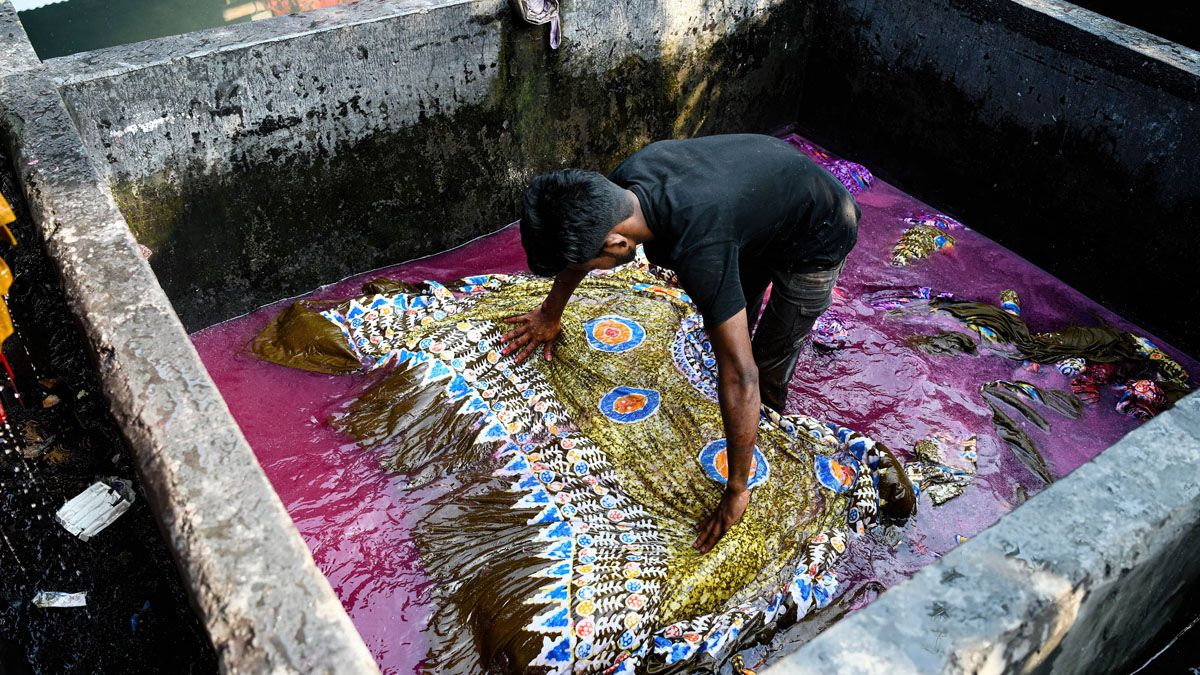
Its complexity appears to be designed to ensure the tariffs take effect. Strickler said the new tariff angle gives the president a different way to accomplish “anything he wants to impose tariffs on any particular country.”
A misguided solution
While most in the fashion industry are committed to eliminating forced labor, Hughes said tariffs are not the right remedy.
When Uzbekistan was found to have forced labor in its supply chains, the response from the fashion industry was immediate and effective. The Cotton Campaign’s 2010 Uzbekistan Cotton Pledge attracted more than 300 companies to join a boycott of the country’s cotton. NGOs, human rights groups and labor advocates have stepped up pressure, making Uzbekistan’s failure as much a reputational issue as it is an economic one. The country responded with workforce reforms and enhanced traceability and was able to recover some lost business.
Hughes said tariffs were too indirect to have the same effect. Forced labor risks are often embedded deep upstream, while tariffs hit import transactions across the border. Imposing tariffs does not necessarily result in a clean break with contaminated supplies, nor does it necessarily require traceability. For punitive tariffs to work, the economic pain must outweigh the costs of changing labor practices.
Tariffs may be high enough to effect change, but whether it adequately addresses forced labor remains to be seen. Of course, fashion takes a hit either way. The new tariffs are intended to replace previous Section 301 reciprocal tariffs, which could also be as high as 25%, depending on the country. Looking specifically at Europe, where forced labor standards tend to be stricter than in the United States, a big question is whether the EU will be hit by this, Hughes said.
“It’s hard to read the tea leaves,” Hughes added. “I would expect there to be different tariffs in different countries because some are more of a concern than others.”
If the fashion world wasn’t already paying enough attention, the Office of the U.S. Trade Representative is currently conducting another Section 301 investigation, with hearings concluding on Friday. The question is looking at whether countries are producing too much to the point of hurting U.S. commerce. Bangladesh, China, Vietnam, India and others are once again in trouble. According to the Office of the U.S. Trade Representative, this could mean imposing separate tariffs on top of forced labor if the U.S. deems those countries’ practices to be “unreasonable.” Hughes said the two investigations combined were intended to produce a tariff rate that was at least the same as Section 301, and “possibly higher.”
At the end of April, USTR also released its annual Special 301 report, examining the global intellectual property protection status. In it, they listed Vietnam as a target for prosecution for intellectual property infringement. Hughes said the United States was “increasing pressure” on Vietnam, adding that it could become another avenue for the government to raise tariffs on America’s second-largest apparel supplier.
“They’re looking at every mechanism they can to deal with the threat of tariffs,” Hughes said. “We really don’t have any indication of where this might go.”