The Tamesis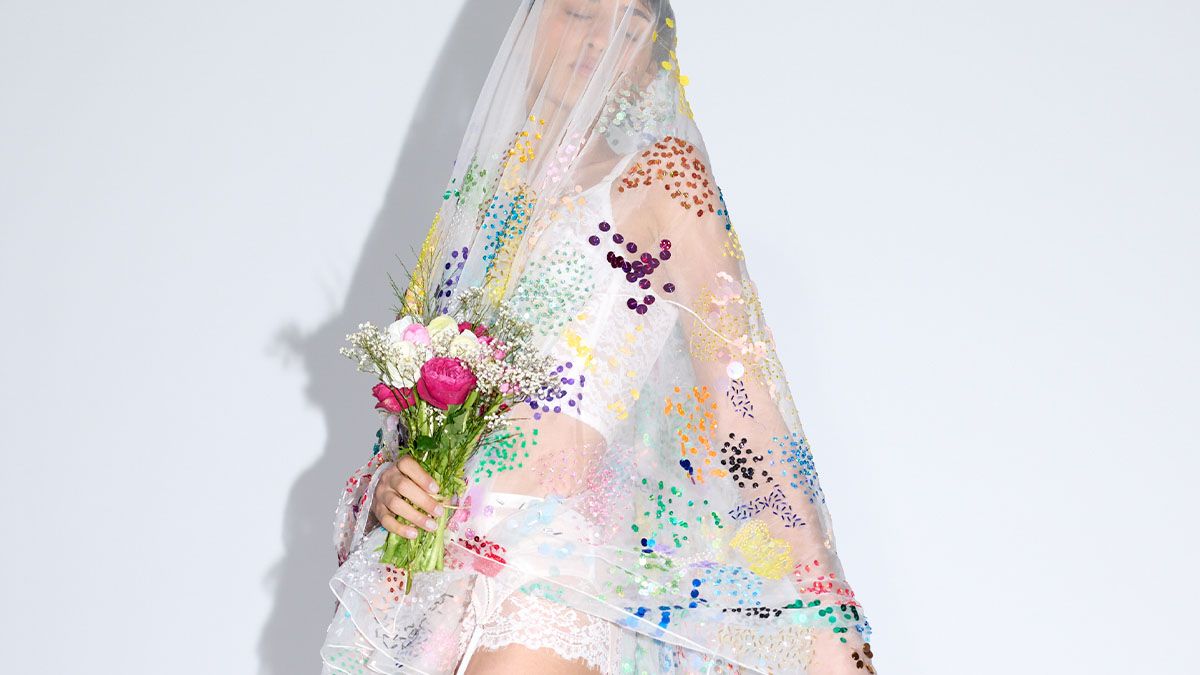
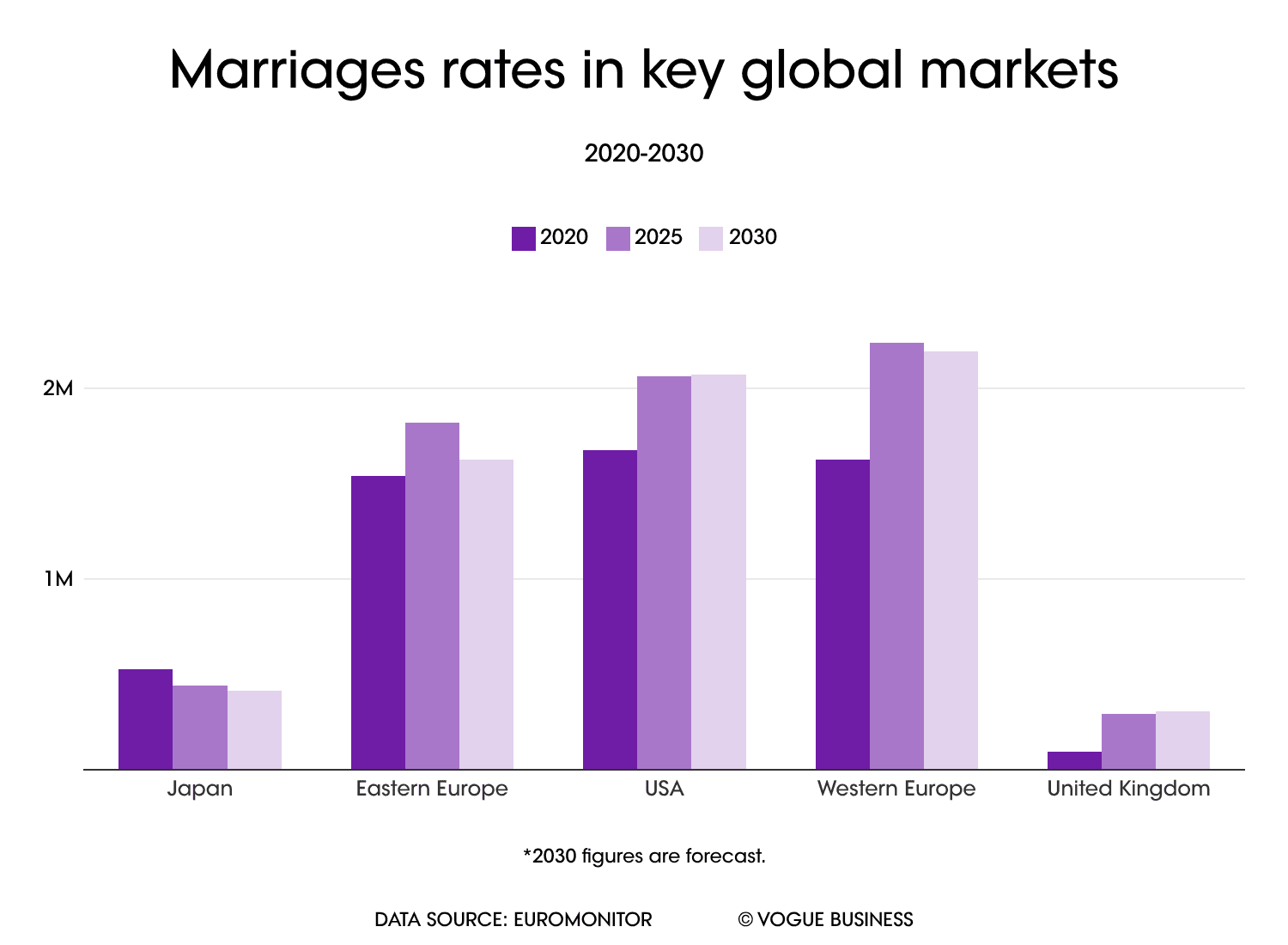
Weddings may be bigger than ever, but interestingly, U.S. marriage rates have slowed slightly since 2022, according to Euromonitor, which is forecast to plateau at 6 marriages per 1,000 people between 2026 and 2030. In Western Europe, Eastern Europe and Japan, the declines were even steeper.
So, what gives? Although marriage rates continue to decline, in today’s challenging macroeconomic environment, newlyweds are increasingly aging as people reach life milestones later in life. In fact, Gen Z is more likely to prioritize self-development and independence, ensuring financial security before settling down. Fflur Roberts, head of luxury goods at Euromonitor, pointed out that the average age of first marriage for women globally is on the rise and this trend is expected to continue until 2030. With this comes a shift in consumer demand. “Older couples often tend to prioritize quality, craftsmanship, personalization and non-traditional aesthetics over quantity-driven, low-cost options,” she explains. “As a result, value growth is moving away from mass-market wedding retail and towards high-end, luxury, bespoke and boutique segments.”
Therefore, the bridal economy of 2026 will be split in two. As a study by wedding planning platform The Knot points out, U.S. wedding spending will see a K-shaped split in 2025, with high-income earners doubling down on discretionary spending and low-income earners spending less on luxury goods — a pattern expected to continue this year.
Luxurious or not, most weddings are now multi-day events (The Knot found that nearly 71% of weddings lasted two to three days), each carefully divided into an ever-growing series of rehearsal dinner, welcome reception, after-party and brunch the next day. Furthermore, according to Research and Markets, the destination wedding market is expected to climb from US$47.85 billion in 2026 to US$82.92 billion in 2030, representing a compound annual growth rate of 14.7%, which can be attributed to reasons such as the growing demand for experiential and exclusive celebrations. These are the sartorial opportunities that high-net-worth individuals (HNWIs) and ultra-high-net-worth individuals (UHNWIs) are planning – many of whom attend a series of lavish weddings throughout the year.
In this competitive environment, market differentiation is key. “At Harrods, bridal is seen as a lifestyle rather than a single purchase,” says purchasing director Poppy Lomax. “Our role is to create a complete bridal ecosystem – one that reflects the actual lifestyle of modern weddings.” Listing engagement moments, bachelorettes, civil ceremonies, destination weddings, the night before, the day after, pre-wedding dinners and honeymoons as potential sartorial occasions, she describes what she calls the “age of the bride” – an ongoing period of celebration that brings with it huge business opportunities.