The Tamesis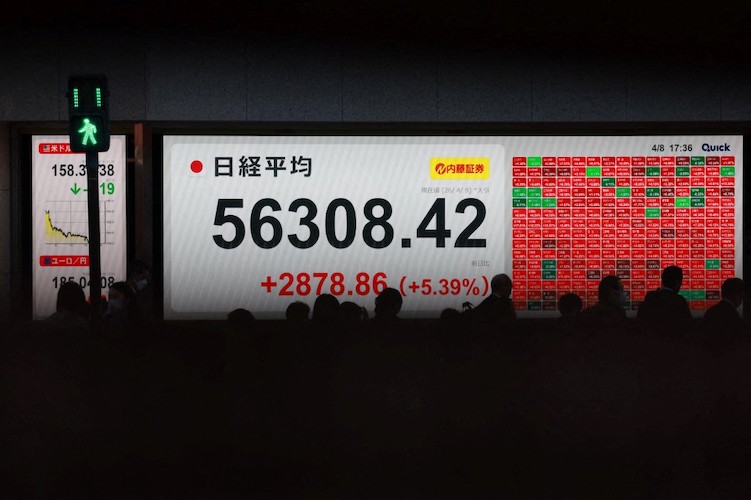
Asian markets soared, while oil and gas prices fell on Wednesday after the United States and Iran agreed to a temporary ceasefire that would include reopening the Strait of Hormuz.
“This is a huge market reversal,” Kathleen Brooks, research director at XTB Trading, told AFP after oil prices plunged about 15% to below $100 a barrel.
“There is a lot of hope in the market … that this (ceasefire) agreement will primarily allow the movement of goods through the Strait of Hormuz.”
See also: Samsung Electronics expects AI boom to drive profit jump 755%
European natural gas prices drop 20% at opening news of armistice It follows a conflict that lasted more than a month, killing thousands and hammering the global economy.
Stocks surged on Wednesday, with Europe’s main stock indexes rising 3-5% in midday trading.
Tokyo stocks closed up 5.4%, while Shanghai and Hong Kong stocks rose about 3%.
U.S. futures were also sharply higher ahead of Wall Street’s reopening on Wednesday, while Middle Eastern stocks were higher.
The dollar, a safe-haven investment in times of market turmoil, fell against the euro, yen and pound as investors returned to riskier assets.
“We expect volatility to remain high in the coming days as investors scrutinize negotiation details and ship traffic data,” said Matthew Ryan, head of market strategy at global financial services firm Ebury.
“Oil prices and the dollar could reverse course quickly if negotiations stall or activity across the Taiwan Strait remains subdued.”
Maritime monitoring agency Marine Traffic noted that two ships have passed through the strait since Iran agreed to reopen the waterway, through which large amounts of the world’s oil, gas and fertilizers pass.
Trump said the U.S. would help increase traffic as shipowners and charterers prepared to move ships stuck in the Gulf.
Shipping magazine Lloyd’s List estimated that around 800 ships were hampered.
Meanwhile, the International Air Transport Association said it would take months for jet fuel supplies and prices to return to normal even if the strait reopens.
“I don’t think it’s going to happen in a matter of weeks,” Willie Walsh said, citing “disruptions to refining capacity in the Middle East.”
Across global stock markets, most sectors posted sharp gains. The biggest winners were mining groups, banks and airlines, with some gaining more than 10%.
However, energy stocks fell after rising sharply over the past few weeks.
Although oil and gas prices fell sharply on Wednesday, they remain well above levels seen in late February on the eve of the Middle East war.
“I don’t think we’re going to get back to pre-war levels (any time soon),” Brooks said.
“The reason is that energy infrastructure across the Gulf has been targeted.”
Key figures around GMT 1045
North Sea Brent crude oil: fell 13.9% to $94.05 a barrel.
West Texas Intermediate crude oil: fell 16.3% to $94.57 a barrel.
TOKYO – Nikkei 225: up 5.4% to 56,308.42 (close).
Hong Kong’s Hang Seng Index: rose 3.1% to 25,893.02 (close).
Shanghai – Composite Index: up 2.7% to 3,995.00 (close).
USD/JPY: fell from 159.70 yen to 158.42 yen.
LONDON – FTSE 100: up 2.8% to 10,641.08.
Paris – CAC 40: up 4.5% to 8,264.84.
FRANKFURT – DAX: up 4.8% to 24,031.45.
- AFP Additional editing and input by Jim Pollard
See also:
Australia and China reach energy security deal as Iran war intensifies
Asian fuel importers eye Saudi ports amid uncertainty in Strait of Hormuz
Nexperia’s Chinese subsidiary’s chips “nearly fully localized”
Vietnam quickly passes Southeast Asia’s first artificial intelligence law
South Korea approves $350 billion in U.S. investment to reduce tariffs
Nvidia supports South Korea in building ‘largest’ sovereign AI data center
Microsoft will invest more than US$1 billion in building cloud and artificial intelligence data centers in Thailand
Has organized crime consolidated its grip on Cambodia?