The Tamesis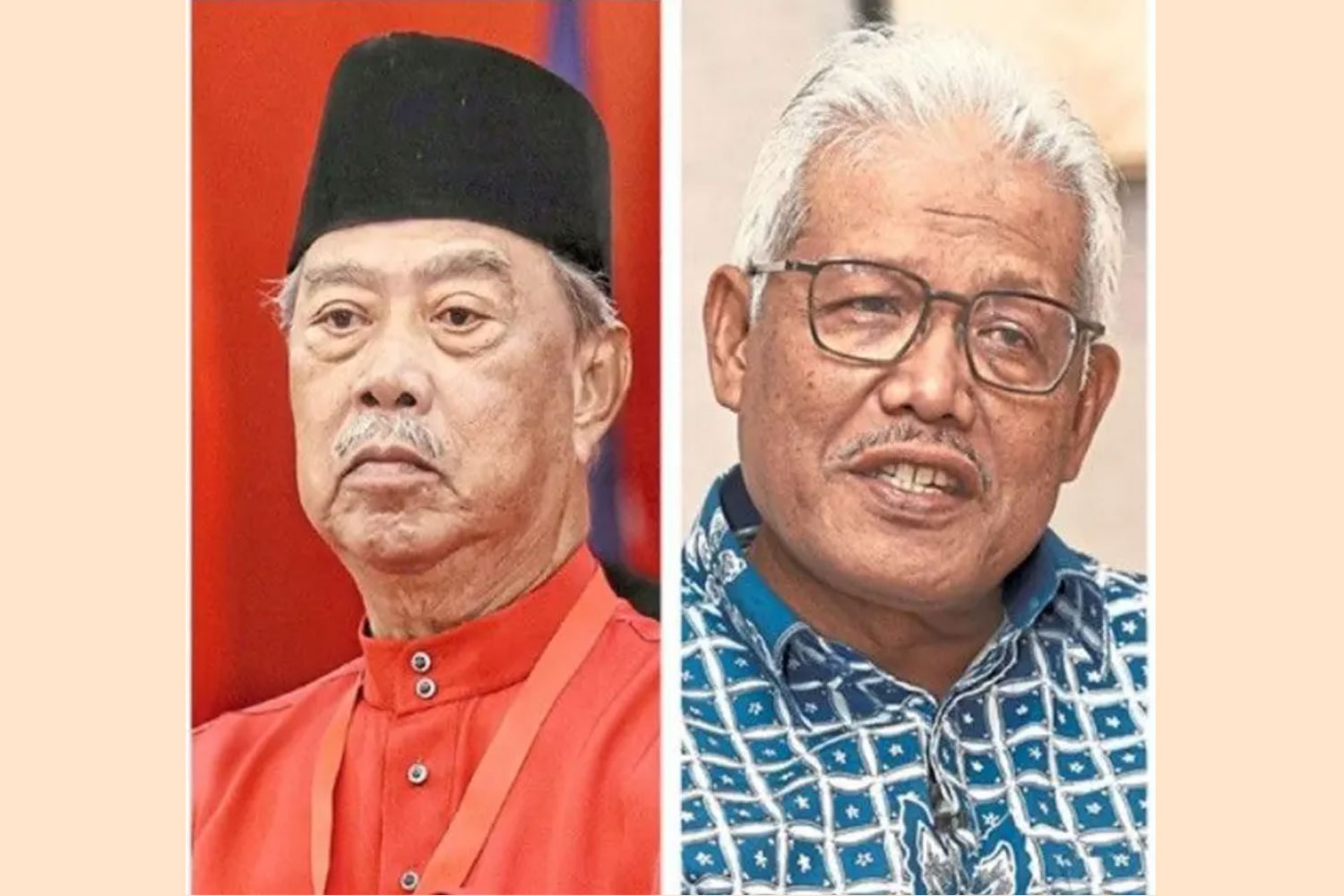
April 8, 2026
Kuala Lumpur – The survival of any political party depends on the cruel logic common to trading floors: “Don’t catch a falling knife.” In the world of finance, this is a stern warning against buying a stock or asset whose price is plummeting rapidly.
There is a belief that if you try to catch an asset that is plummeting – “buying the dip” as they say – you will only be hurt by its momentum before it hits bottom. You wait for the knife to hit the ground, stop bouncing, and lie still before you even think about reaching for it.
It is becoming increasingly clear that Bersatu has become that falling knife, and its decline is only accelerating. The collapse of its value defines the party’s status as a falling knife. A party depends on the stability of its command structure and the loyalty of its apparatus, and both have been destroyed.
Earlier this year, Bersatu chairman Tan Sri Muhyiddin Yassin severed ties with deputy chairman Datuk Seri Hamzah Zainuddin, which was not a strategic adjustment but a structural amputation.
However, Muhyiddin, who resigned as Perikatan Nasional chief in January, remained defiant, dismissing claims that Bersatu was “buried” as mere slander by disgruntled rebels. He believes the recent expulsions are a necessary purging process to weed out spoilers and restore discipline stipulated in the party’s constitution.
From Muhyiddin’s perspective, the party is not a falling knife but a surgical scalpel with which he cuts away rot and slashes dead weight. He believes that this “purge” is a crucial integration that will make Bersatu a more powerful tool to face the challenges of the 16th General Election (GE16).
Despite this, the party has effectively lost its deputy chairman Datuk Seri Ronald Kiandi and Sri Kandi Bersatu president Datuk Seri Mas Elmiyetti Shamsuddin, both of whom have publicly backed Hamza.
While the party opted to suspend them to prevent them from moving freely under anti-job-hopping laws, both leaders made it clear they would prefer to sack them outright so they could settle with the party once and for all.
So far, only a handful of Hamza’s team MPs have been sacked, with the remaining rebel MPs still in a state of tactical uncertainty. Although no formal action has been taken against any individual, the alliance is clear: Hamza’s team commands about 19 MPs, while Muhyiddin loyalists have around six.
The mathematics of betrayal is abominable. With these 19 MPs effectively operating outside the party’s control and pledging allegiance to the new PN chairman and PAS deputy chairman Datuk Seri Ahmad Shamsuri Mohdah, PPBM is no longer wielding the knife in the opposition alliance.
The mass exodus marks the loss of its “big brother” status; for years, PPBM had presented itself as the moderate, technocratic representative of Perikatan Nasional. With PAS officially taking over as Perikatan Nasional chairman, Bersatu is no longer the hand holding the handle and has become part of a pile of dull blades in the drawer that PAS now owns.
The Knife also faces deadly competition from the formation of Hamza’s team, which will mathematically have more MPs than Bersatu from day one.
The new party is likely to be warmly welcomed by the PAS leadership, which Bersatu is powerless to stop. PAS president Tan Sri Abdul Hadi Awang confirmed that a new opposition leader would only be appointed before Parliament’s June session, further underscoring his tacit support for Hamza, effectively allowing him to retain the position for the time being.
This series of events indicates that Bersatu will withdraw from the alliance, or even be kicked out of the alliance. With PAS firmly in the driver’s seat, Muhyiddin’s demand to “take back” the seats held by Hamza’s team in the 16th general election is seen as unproblematic.
The friction has created a confusing dual leadership crisis within the opposition parties. We now face two different opposition alliances in Peninsular Malaysia: the PAS-led Perikatan Nasional and Muhyiddin’s Rakyat Rakyat (IPR), a loose alliance formed in October 2025 by 11 parties outside the government bloc.
While Bersatu tried to project the IPR as a “big tent” platform to attract non-Malay support, PAS snubbed its conference. By skipping the meeting chaired by Muhyiddin, PAS is sending a signal that it refuses to recognize the second leader of the opposition bloc. While Muhyiddin is trying to make intellectual property the dominant force in regaining influence, without PAS’s machinery and mandate, this move may fail.
The danger in trying to “catch” Bersatu’s knife now is that the floor is simply not visible. With 19 MPs effectively operating as an independent bloc, Bersatu’s influence has been reduced to negligible levels. Every attempt to project power through intellectual property is met with the cold reality of PAS’s absence.
In this environment, any investment of political capital in the Bersatu brand is a gravity-defying gamble.
A falling knife gains speed because it lacks a basic base of support to slow its fall. Historically, Bersatu has survived by acting as a “bridge” to moderate Malay voters, but that bridge has collapsed.
Muhyiddin’s team countered that the “Abba” brand – the fatherly image Muhyiddin cultivated during his tenure as prime minister from 2020 to 2021 – remained a powerful force capable of solidifying the party’s support among Malay voters.
But Hamza’s team told me that with PAS now the undisputed senior partner and Hamza’s new tools poised to absorb the party’s remaining MPs and leaders, PPBM is no longer a strong party.
Even MIC ultimately chose not to catch the falling knife; despite active efforts from the PN, the party decided to stay with the BN because Bersatu was no longer the leading party in the opposition alliance.
Bersatu has not yet taken hold. Will you catch the falling knife?