The Tamesis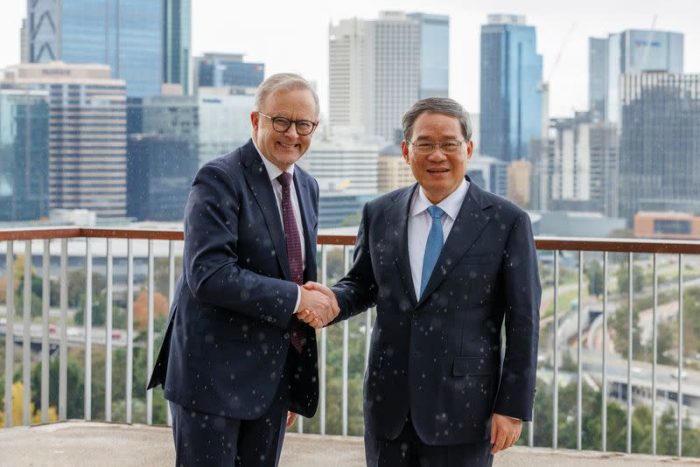
With countries in the Asia-Pacific region concerned about energy shortages caused by the US-Israel war, Australia has contacted China to try to ensure it has enough fuel in the coming weeks and months.
Australian Prime Minister Anthony Albanese held a phone call with his Chinese counterpart Li Qiang to discuss energy security “in light of current global challenges”, according to a delicately worded statement from Canberra on Tuesday (April 7).
The two governments said the leaders agreed to support regional energy security as the world faces rising oil prices due to conflict in the Middle East.
See also: Asian fuel importers eye Saudi ports amid uncertainty over Strait of Hormuz
Australia imports an estimated 90% of its refined petroleum products, mostly from Asia.
Although Australia is a major exporter of liquefied natural gas (LNG), leaders of its two main political parties have long neglected to strengthen its strategic reserves, which are relatively small.
Recent reports suggest the country’s reliance on refined oil imports has left it vulnerable, with some sources saying fuel reserves had fallen to just 10 days’ worth of supplies in March.
China is Australia’s main source of aviation fuel and a major importer of Australia’s iron ore and natural gas.
Australia is reportedly seeking an exemption from China’s recent fuel export ban.
“Keeping aviation fuel supplied”
China, which will supply about a third of Australia’s jet fuel by 2025, is also keen to boost trade with Canberra.
Prime Minister Li Qiang Visit Australia in June 2024China has previously called for deeper cooperation in “green areas” such as renewable energy, electric vehicles and energy storage, given its dominance in these areas.
“The Prime Minister and Prime Minister Lee agreed to strengthen inter-governmental communication so that Australia and China work together to support regional energy security,” a government statement said.
According to AFP, both sides agreed that high-level contacts are at the core of a “mature, stable and constructive relationship.”
Li Keqiang said economic cooperation between the two countries has “huge potential in the long run,” adding that “both sides should speed up the review and upgrade of the bilateral free trade agreement.”
According to a briefing from the Chinese Ministry of Foreign Affairs, Li Keqiang said that “China is willing to import more high-quality products from Australia” and that there is “huge potential” for deepening cooperation in the field of clean energy.
Albanese said he would travel to Singapore on Thursday to discuss trade in essential supplies such as diesel and liquefied natural gas.
Singapore is Australia’s largest supplier of refined petroleum products.
Last week, the Australian government halved petrol and fuel taxes for three months to help ease rising costs for motorists and truckers.
See also:
Asia ‘worst hit by energy crisis’ due to Iran war
The Gulf War intensifies, large Chinese ships sail through the strait, and oil prices rise again
India’s demand for wood, coal poor as gas prices soar due to Iran war
War with Iran could hit some of Asia’s biggest economies hard
India races to secure supplies as new attacks threaten ‘energy war’
Iran war sends gas prices soaring, Asia ramps up coal power generation
Carney leads trade shift away from US, China, India, Australia
Chinese PM’s trip to Australia highlights race for critical minerals