The Tamesis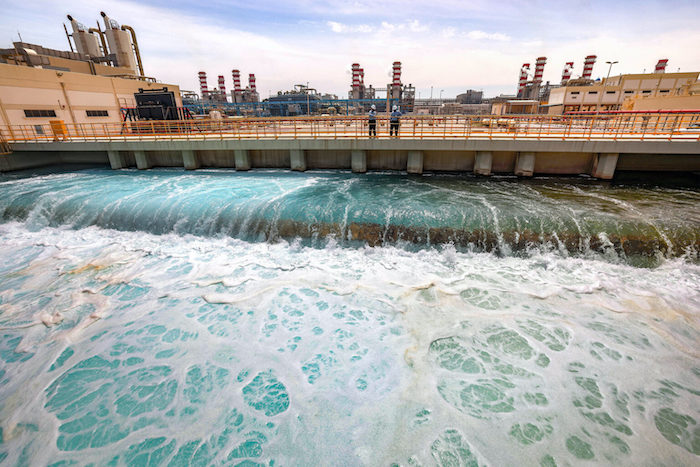
The Gulf war intensified on Tuesday, with the United States and Israel launching a wave of attacks on military bases and other targets in Iran, Lebanon and Yemen, while Iran retaliated against Iraq, Saudi Arabia and a Kuwaiti oil tanker near Dubai.
U.S. President Donald Trump has sent conflicting signals on whether Washington will further escalate the war by deploying U.S. ground troops or try to end it quickly through negotiations with Tehran.
Trump threatened on Monday that the U.S. military would “destroy” Tehran’s oil wells, the main export terminal on Khag Island, the power system and possibly the desalination plant if Iran did not agree to a deal.
Also read: Two more India-bound LPG tankers transit Strait of Hormuz
The impact on financial markets follows a similarly predictable pattern. Oil prices rose again on Tuesday, with Brent crude up more than 5% at 15.30 GMT and U.S. (WTI) crude up 0.7%.
Asian markets were mostly lower, with Tokyo’s Nikkei down 1.6%, the Shanghai Composite down 0.8% and Mumbai’s BSE Sensex down 2.2%. However, Hong Kong’s Hang Seng Index edged up 0.15%.
Video footage verified by AFP showed two massive explosions in the central Iranian city of Isfahan on Tuesday, while Iranian state media reported damage to the Shia religious center of Greater Husseiniya in Zanjan, in the northwest.
The Iranian government also said the airstrike hit a factory producing anti-cancer drugs and narcotics, but AFP could not independently verify that. Another big problem is Desalination plants may be targeted both sides
Oil tanker leaves Dubai
Meanwhile, civil defense authorities said explosions were heard near airports in Dubai and Erbil in northern Iraq, and two people were injured when air defense forces intercepted a drone near the Saudi capital Riyadh.
Kuwait National Oil Co. said one of its oil tankers caught fire near Dubai following a “direct malicious attack by Iran” and that the crew was not injured and the fire was later put out. These actions have helped Iran maintain control of the Strait of Hormuz and sent shockwaves through the global economy.
Fuel prices in the United States have topped $4 a gallon, their highest level in nearly four years, while Indonesia has announced fuel rationing and ordered civil servants to work from home one day a week to help conserve energy.
In a Truth Society post, Trump lashed out at countries that refuse to help the U.S. protect the vital waterway.
“The United States will no longer help you, just as you no longer help us,” he wrote. “Iran is basically destroyed. The hard part is done. Go get your own oil!”
Chinese warship passes through strait
The countries hardest hit by the oil crisis appear to be spread across Asia. But Iran has allowed some Chinese container ships to pass through, and its parliamentary committee voted to impose tolls on other vessels while banning U.S. and Israeli ships from passage altogether.
Beijing on Tuesday expressed “gratefulness” to three Chinese ships for being able to pass through the Strait of Hormuz, a vital waterway that Iran has all but shut down.
Data from MarineTraffic Monitor showed that two ships owned by state-owned shipping giant Cosco crossed the strait as they left the bay on Monday morning.
The third vessel, the Egret, a Hong Kong-flagged oil and chemical tanker, sailed from east to west early on March 25, according to maritime analytics firm Kpler.
“After coordination with relevant parties, three Chinese ships passed through the Strait of Hormuz recently,” Foreign Ministry spokesperson Mao Ning said at a press conference.
“We are grateful for the help provided by relevant parties,” she said. Mao Ning did not mention Iran, nor did he specify who was involved in the coordination work.
Two of COSCO’s ships – the CSCL Indian Ocean and the CSCL Arctic Ocean – are ultra-large container carriers. They passed near Larak Island in Iran and headed to Port Klang in Malaysia.
The ships aborted their transit attempt on Friday, according to MarineTraffic. Iran, which has healthy diplomatic relations with China, said the Strait of Hormuz was open to ships from “friendly countries”.
China and Pakistan called for peace talks as soon as possible and agreed to strengthen cooperation on the Iran issue.
The two countries outlined a joint initiative “to restore peace and stability in the Gulf and Middle East” following a visit by senior Pakistani officials to Beijing.
Concerns about desalination plants
Trump’s threats to Iran include not only the “total destruction” of the energy base, but also the “possible destruction of all desalination plants!”
An Iranian health ministry official told the ISNA news agency on Tuesday that the attack caused a “complete shutdown” of a desalination plant on Qeshm Island in the Strait of Hormuz, but did not specify when.
Iran has vowed to carry out attacks on its infrastructure and similar attacks on its U.S.-allied Gulf neighbors.
If more desalination plants were attacked, it would pose a significant risk to water-starved regions, and experts have warned that attacks on civilian infrastructure could amount to war crimes.
Desalinated water provides 70% of the drinking water in Saudi Arabia and 90% in Kuwait.
- AFP With additional input and editing by Jim Pollard
Note: The title of this report was revised on March 31, 2026.
See also:
India’s demand for wood, coal poor as gas prices soar due to Iran war
India races to secure supplies as new attacks threaten ‘energy war’
Iran war sends gas prices soaring, Asia ramps up coal power generation
War with Iran could hit some of Asia’s biggest economies hard
Iran war trumps sanctions, Indian refiners snap up Russian oil
Iran threatens to ‘destroy world economy’ as more ships attacked
Iran says three ships attacked, ready for $200 a barrel price