The Tamesis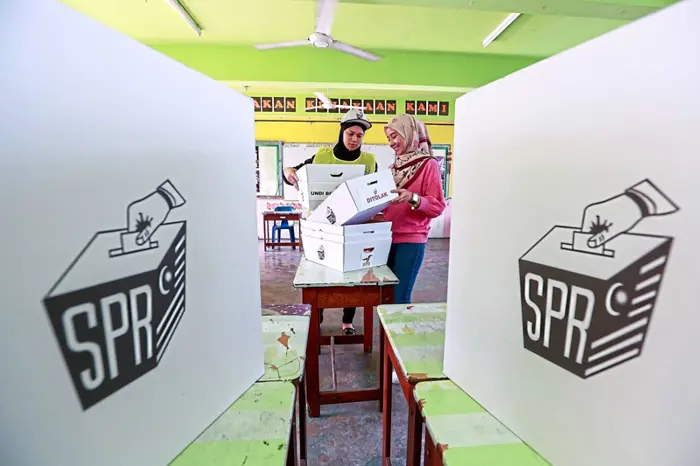
March 30, 2026
Kuala Lumpur – Every morning at 11 o’clock, a farmer is feeding his flock of turkeys. A poultry “scientist” observed eating trends for a year and concluded that “the laws of the universe dictate that food arrives every morning at 11 o’clock”.
Empirical evidence from turkey scientists shows that this law is predictable and holds true every day.
However, on the fourth Thursday of November, Thanksgiving Day, when the farmer arrived at 11 a.m. as usual, instead of bringing food, he brought a knife and slaughtered the entire flock.
The moral of the story is beware of wrong patterns. Just because we observe a law to be valid for a period of time does not mean that it is an absolute truth of the universe.
Another moral is observation versus reality: we may just be “turkeys” observing a pattern that only exists because a higher power (or “farmer”) allowed it to exist at a certain time.
You might recognize this from Chinese science fiction writer Liu Cixin’s Hugo Award-winning novel The Three-Body Problem. I’ve been watching a 30-episode Chinese-produced series based on the book, which explores a universe where a disillusioned scientist’s secret message into the universe triggers a global scientific crisis and alien invasion.
Liu’s “Peasant Hypothesis” is a disturbing metaphor for the limitations of scientific observation and the fragility of what we consider “natural laws.”
When I look at the world through a political lens, I immediately think of the peasant hypothesis in relation to Malaysian politics. The theory begins by arguing that BN is an immovable constant in the universe; a “law of physics” that cannot be defeated in Malaysian politics.
Most political analysts and politicians believe that defeat of the coalition in the 2018 14th General Election (GE14) is statistically and structurally impossible. They rely on decades of empirical data since 1957 (13 straight wins) to prove that farmers always bring feed.
Even the leader of the opposition at the time told me that it would take at least two or three more elections to topple the Barisan Nasional – meaning they would not be in power until 2028. In fact, I met a top leader of the Pakatan Harapan coalition when I was in Sabah in 2018, and he said that his alliance only hoped to gain enough seats to form a strong opposition party, rather than actually defeat the Barisan Nasional.
However, the great old alliance was ultimately massacred on Thanksgiving Day.
The 14th general election proved to be an 11 a.m. convention, during which the rules of the game fundamentally changed. Just as scientific observations of turkeys failed to explain farmers’ true intentions, political institutions failed to see that past patterns were no guarantee of the future. The “Barisan Nasional Invincibility Law” is not a law at all – it is simply a continuum that ends the moment the butcher knife of voter sentiment finally swings.
The voters are farmers. In the 14th general election, they decided they had had enough of the Barisan Nasional.
Another farmer assumption is that almost all Chinese voters support the DAP and its alliance Pakatan Rakyat/PH.
In the 13th national election in 2013, Pakatan Harapan won 80% of the community votes. It has been called the China Tsunami, or “Apa lagi Cina mahu?” (What else do the Chinese want?) In the 14th general election in 2018, 95% of Chinese voters voted for Pakatan Harapan. Barisan Nasional’s rejection was almost absolute. In the 15th general election (2022), this proportion is also about 95%.
But the farmer hypothesis does not hold true in Sarawak and Sabah.
Take Sarawak as an example: In the 2021 state election, the ruling Sarawak Alliance of Parties won an absolute majority of 76 out of 82 state seats, while the DAP only won two seats, a sharp drop from the previous 7 seats. This pattern then reversed during the 2022 15th national election, with the PAP recovering and winning five parliamentary seats in the state.
The fluctuations are more pronounced in Sabah. In the 2020 Sabah polls, DAP was on top, winning six state seats. However, by the 2025 poll, the number of eggs had dropped to eight. In Malaysian political parlance, egg (telur) refers to zero, which means total annihilation.
In Borneo, farmers not only changed their eating habits; He often changed the entire landscape before the turkey had finished its breakfast.
On the peninsula, the DAP remains a solid force and appears to have near-absolute support from the Chinese community. However, there are growing signs that farmers—namely Chinese voters—may be getting ready to give up on turkey.
After the 2022 15th general election, a palpable sense of disillusionment has taken hold. Many Chinese voters believe that the DAP, once the fearless lion of the opposition, has now become a quiet passenger in the coalition government. They point to the slow pace of institutional reform, the lack of progress in recognizing Unified Examination certificates and the party’s relative silence on controversial policies to avoid upsetting its new Malay community partners.
The DAP has been uncharacteristically silent on the latest political controversy involving the so-called “corporate mafia” and NexG Berhad. Had it remained in opposition, it would have been like a loud, clucking turkey, relentlessly demanding to know the identity of “Mr R” and PKR MPs to whom businessman Victor Chin claimed he paid a RM9.5 million “service fee” (which many believed was protection money).
Instead, the ACT Party, a senior partner in Madani’s government with 40 parliamentary seats, has largely fallen into cautious silence. Despite former PKR deputy chairman Datuk Seri Rafizi Ramli’s identity and alleged links to party leaders revealed on social media (both officially denied), the “reformist” voice of the DAP is conspicuously missing.
To voters (i.e. farmers), this silence looks less like strategic patience and more like a turkey that has grown too fat and is too comfortable eating government food to notice that the knives of the 16th election are being sharpened.
The DAP’s crushing defeat in the 2025 Sabah state election has caused an uproar in the South China Sea. This is a stern warning to the party leadership: Chinese votes are no longer “time deposits” (a law of nature).
The traditional argument that the peninsula’s Chinese will not abandon the PAP is the lack of viable alternatives – the turkey farm fence is Perikatan Nasional. This community had supported PAS when they were turkeys under the Pakatan Harapan flag, but they do not want to see a PAS-led green wave seize federal power.
But the universe of “The Three-Body Problem” is defined by the sudden appearance of an unexpected “third body.” New options are emerging that could undermine PAP’s monopoly:
> Warisan: Effectively defeating the DAP stronghold in the 2025 Sabah polls, Warisan has proven it can shake off urban Chinese voters tired of peninsula-centric compromise. If Warisan president Datuk Seri Shafie Apdal succeeds in exporting his Sabah model to city council seats in the peninsula, DAP’s fixed deposits may evaporate.
> Team Rafizi: A faction has formed within PKR. Rafizi, who has acted more like an internal whistleblower than a party loyalist, has the support of around 10 PKR MPs in major city seats. The group has begun to position itself as the conscience of the government, loudly addressing scandals such as the NexG/Corporate Mafia case, while the DAP leadership has remained silent.
The risks to the party are clear. By keeping silent to protect the Madani government, the fat turkey may end up on the Thanksgiving menu alongside its PKR partners when GE16 comes around.