The Tamesis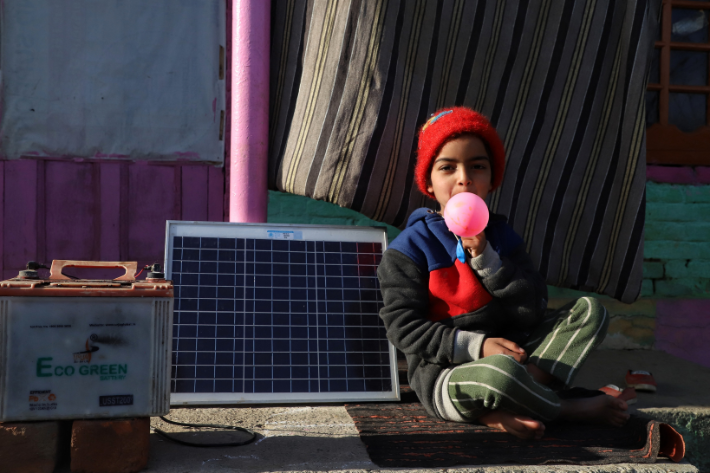
India has announced a long-awaited upgrade to its climate commitments, pledging to increase the share of clean energy in its electricity generation to 60% by 2035.
India’s previous goal was to increase the proportion of non-fossil fuels in installed power generation capacity to 50% by 2030.
It achieved this goal in 2025, five years ahead of schedule. Some analysts say it also means New Delhi’s latest target falls well short of its potential.
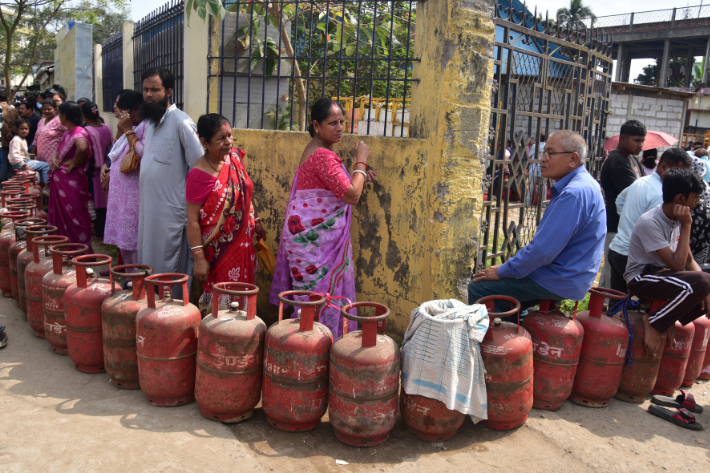
AF also reports: Iran war sends gas prices soaring, India’s shift to wood and coal not in good shape
Clean energy already accounts for 52.6% of India’s installed capacity.
“India’s booming clean energy sector is likely to make faster progress than policymakers are prepared to commit to,” said Lauri Myllyvirta, principal analyst and co-founder of the Center for Energy and Clean Air Research. told Reuters.
At the same time, the world’s fastest-growing major economy and most populous country has also pledged to reduce emissions intensity by 47% by 2035 from 2005 levels.
Emission intensity is a measure of emissions relative to GDP. As of 2020, India’s emissions intensity is 36% lower than in 2005.
The new commitments come after the cabinet approved India’s so-called Nationally Determined Contribution (NDC), a roadmap for achieving climate change goals under the Paris Agreement.
“India’s climate action is sustained and ambitious,” the government said in a statement, adding that its strategy was centered on renewable energy.
According to Reuters, the Central Electricity Authority, an adviser to India’s federal power ministry, predicts that the increase in solar and wind power generation will push the share of clean energy in the power structure to 70% by 2035, much higher than the 60% promised by the government.
New Delhi also plans to create a carbon sink of up to 3 billion tons by 2030 compared with 2005 levels. The updated commitment expands the program to 3.5 to 4 billion tons by 2035.
“India is leveraging extraordinary momentum to achieve its previous renewable energy targets years ahead of schedule,” climate activist Harjit Singh told AFP.
Wartime Coal Concerns
The world’s third-largest emitter of greenhouse gases has been under pressure to curb pollution while meeting growing energy demand.
Like all signatories to the Paris Agreement that aims to limit global warming to 1.5 degrees Celsius, India has until 2035 to submit an updated nationally determined contribution to the United Nations.
The country has pledged to achieve net-zero emissions by 2070 but remains heavily reliant on coal, which accounts for about 75% of its electricity generation.
Although scientists point out that coal’s share of India’s power mix is starting to declineBut how this trend will continue during the Iran War remains to be seen.
Fuel shortages caused by the war have forced India and several other Asian countries to Return to coal to maintain its energy security.
According to United Nations data, China’s carbon dioxide emissions are expected to be 4.4 billion tons of carbon dioxide equivalent in 2024, second only to China and the United States.
However, its per capita emissions and historical contribution to global warming remain well below those of many developed countries.
Although India’s absolute emissions continue to rise as its economy grows, New Delhi often views developed countries as having lower per capita emissions. must do more Fight climate change.
- AFP, with additional editing and input by Vishakha Saxena
Also read:
India races to secure supplies as new attacks threaten ‘energy war’
Iran war trumps sanctions, Indian refiners snap up Russian oil
India fuels nuclear ambitions with $1.9b Canadian uranium deal
Coal power use in China and India falls for first time in half a century
New tax cuts will accelerate India’s shift to solar and wind energy
In the first half of 2025, renewable energy ranked first in coal power for the first time
India’s ambitious plan to decarbonize industry struggles
Iran war sends gas prices soaring, Asia ramps up coal power generation
War with Iran could hit some of Asia’s biggest economies hard
India’s green transition in trouble
Asia’s multi-billion dollar carbon boom?