The Tamesis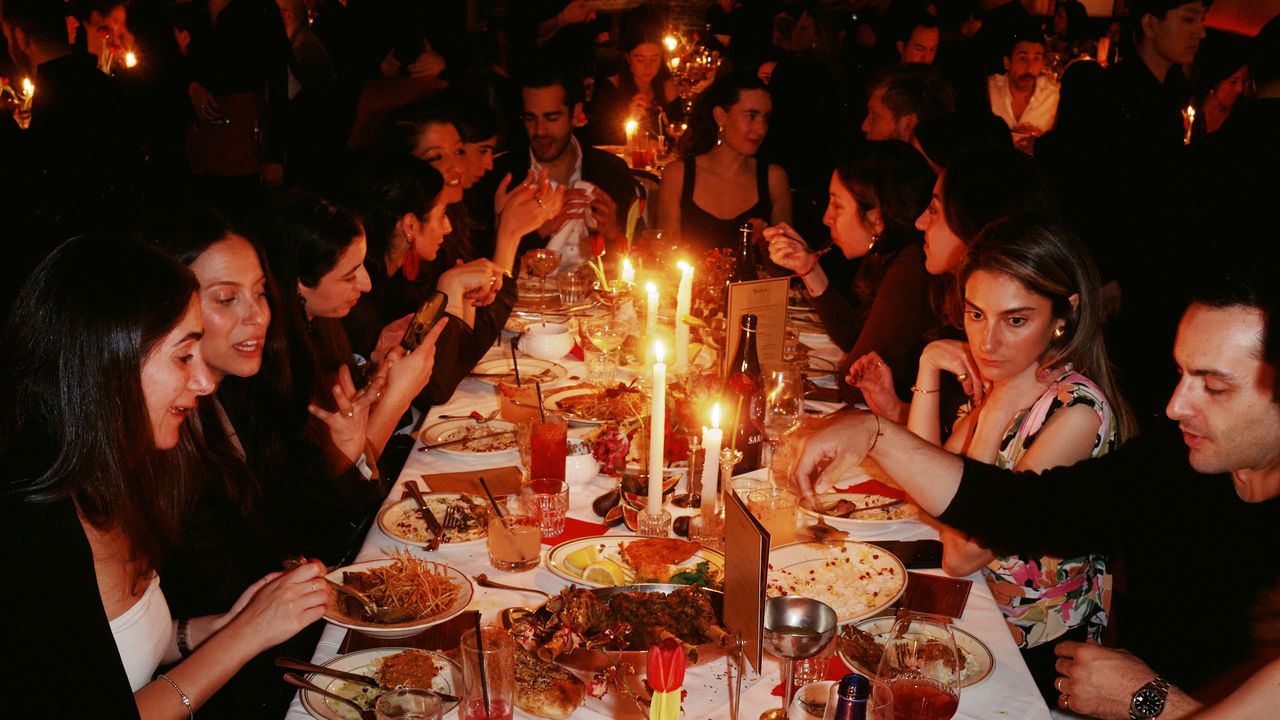
At dinner, I sat across from Omid Afshar, founder of the Joon Club, which hosts events in cities including New York and London that celebrate “Persian culture, music and connections.” (Afshar was in charge of the after-dinner dance, of course.) I told him I liked his name, and he proudly asked me if I knew what it meant. I said yes because I am Pakistani and Urdu borrowed the word from Persian which means “hope”.
As brown kids in America often do, we found ourselves talking about diaspora—how frustrating that label is, and how the word can be so easily flattened. No one in any diaspora has a simple relationship with it, it is always both beautiful and complex. This topic is particularly timely given the ongoing conflict in Iran, which everyone here must have been thinking about every day since the conflict began. I have it too. But the diaspora is never monolithic, and among the Persian diaspora there are no easy answers as to what the best solution is for their community. That is why the preservation of traditions like Nowruz is sacred.
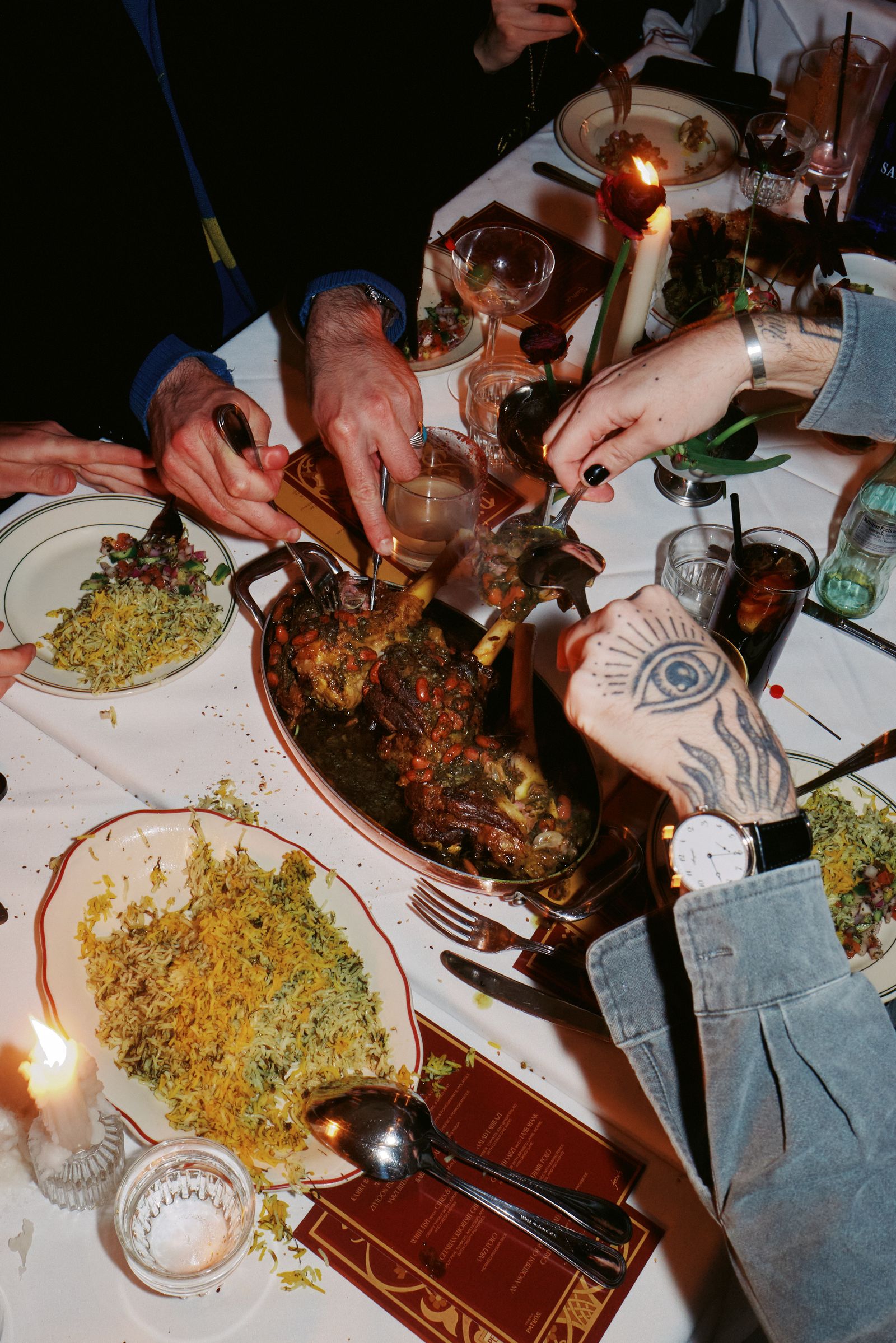
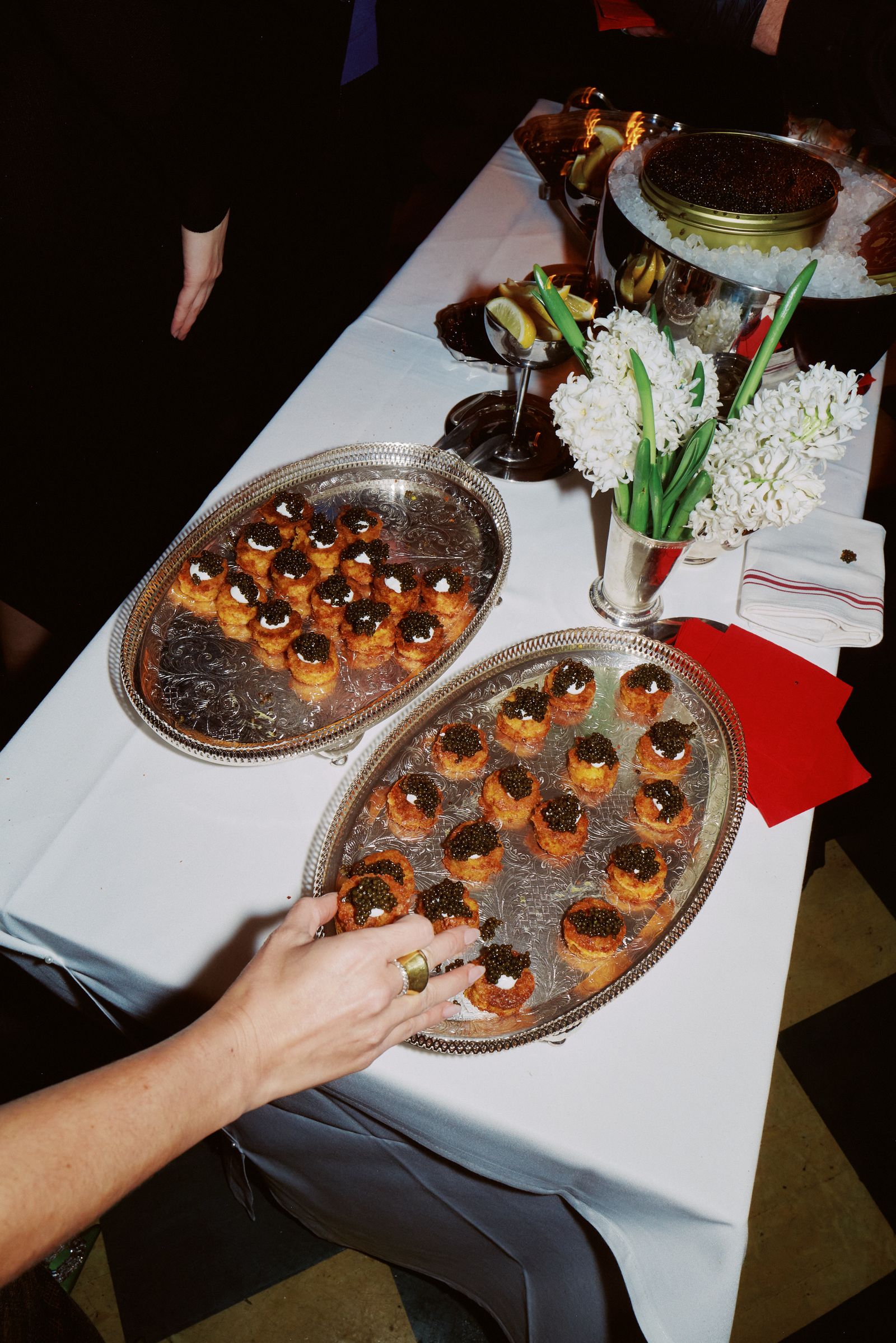
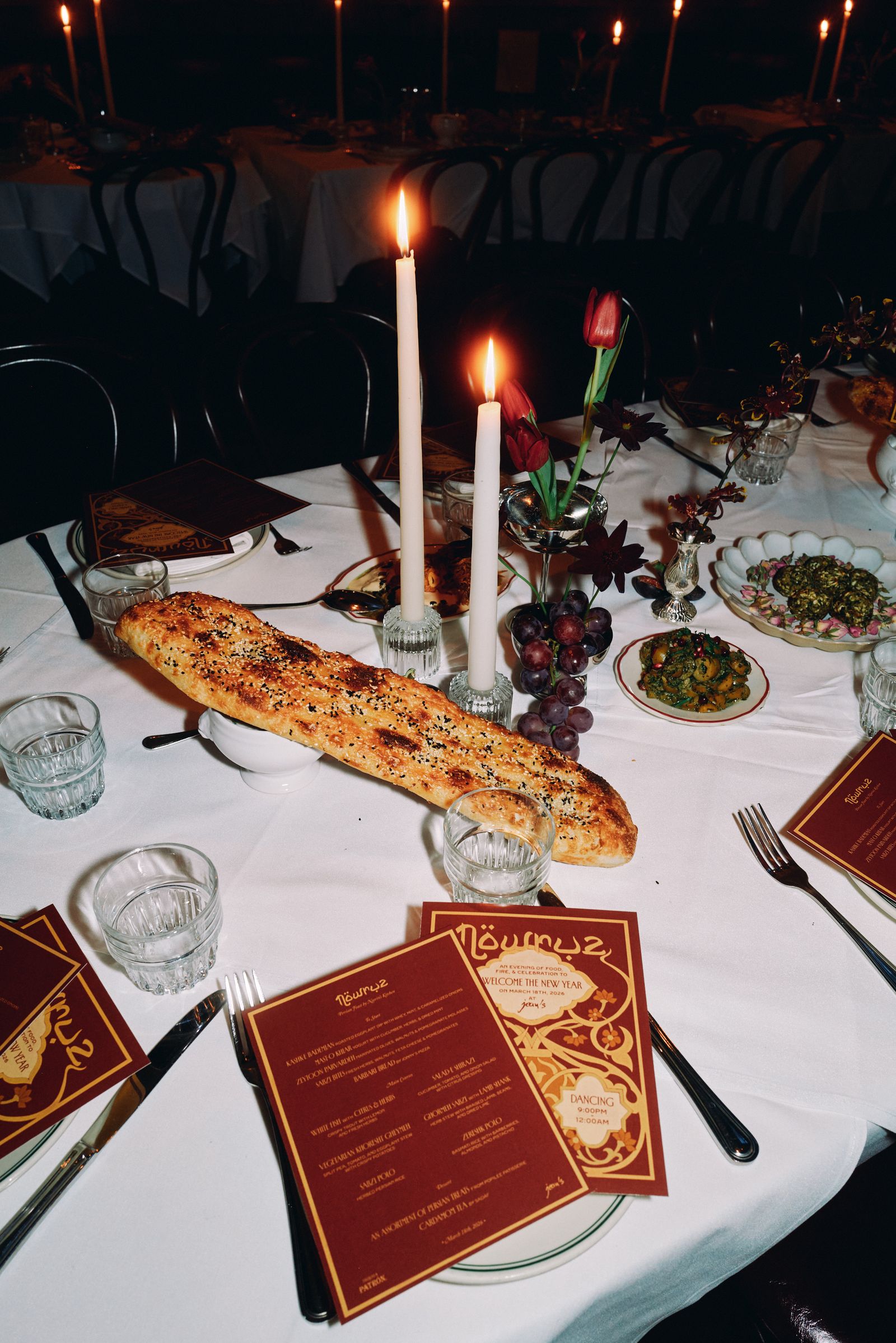
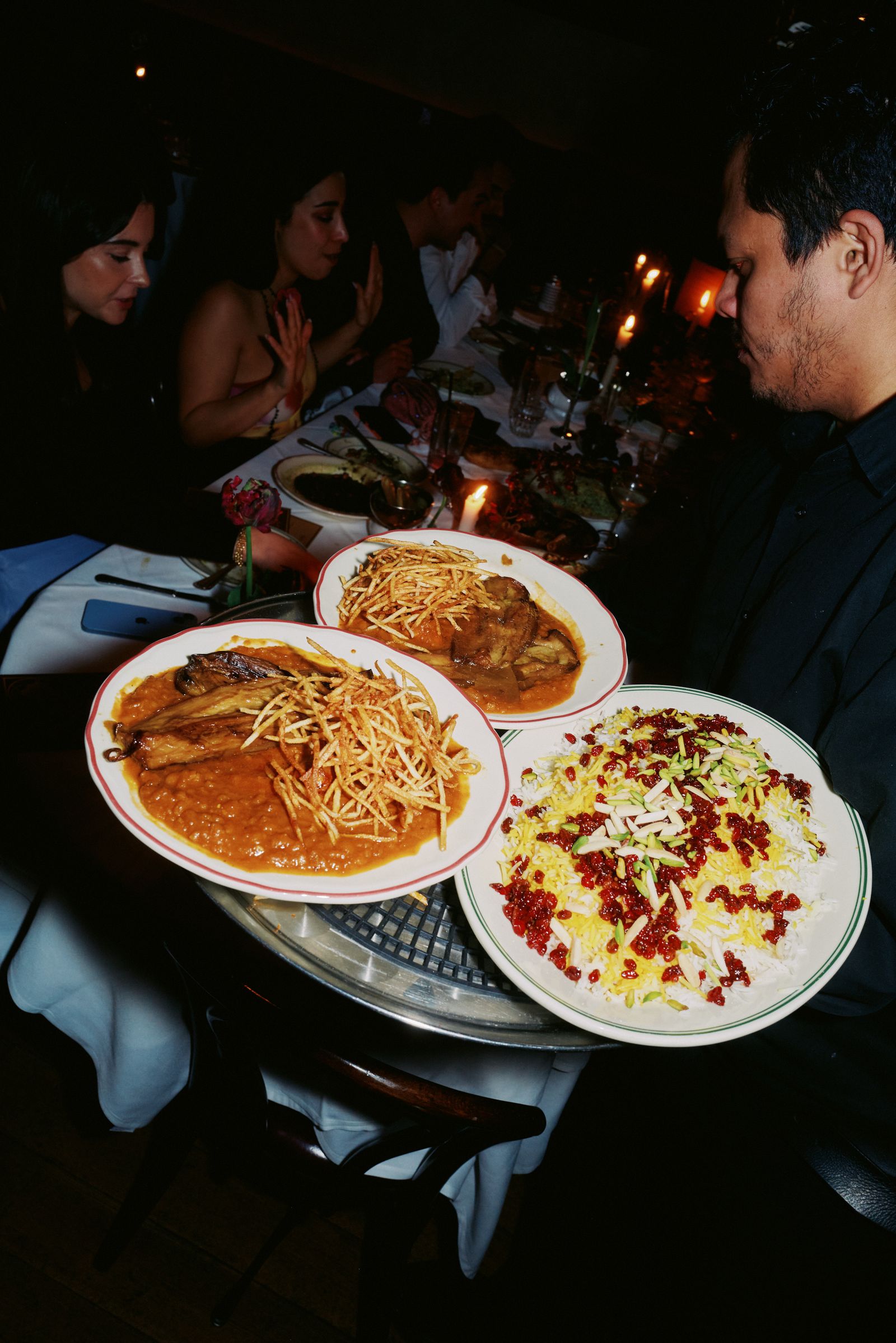
One of the richest traditions of Nowruz is, of course, food. The menu starts with crispy saffron rice topped with caviar and Jonny’s Pizza’s Barbari bread, served with dipping sauces, then moves on to stunning Nasrin’s Kitchen slow-cooked lamb and crispy fish and braised sabzi and beans, with so much variety that it’s sometimes hard to keep the dishes organized. (Though it’s impossible to miss the giant cans in restaurants and bars for impromptu caviar.)
Photography by Kate Owen @thekateowenKate Owen
Photography by Kate Owen @thekateowenKate Owen
Photography by Kate Owen @thekateowenKate Owen
Photography by Kate Owen @thekateowenKate Owen