The Tamesis
Glenn Martens’ show for Maison Margiela provided a symbolic climax to Shanghai Fashion Week FW26, a moment that underscored the designer’s growing resonance in China and the broader transformation taking place across the market.
The quarter unfolded against a still fragile macroeconomic backdrop, but sentiment on the ground was decidedly more constructive. Shanghai is entering a consolidation phase, rather than a passive rebound – characterized by clearer creative direction, more disciplined buying behavior and a clearer expression of local design identity.
This shift is also evident in the ecosystem surrounding the show. More Chinese designers are back on the official schedule with more mature, sophisticated collections. At the same time, participation from international buyers and media continues to grow, signaling renewed global attention to Shanghai as a creative and business platform.
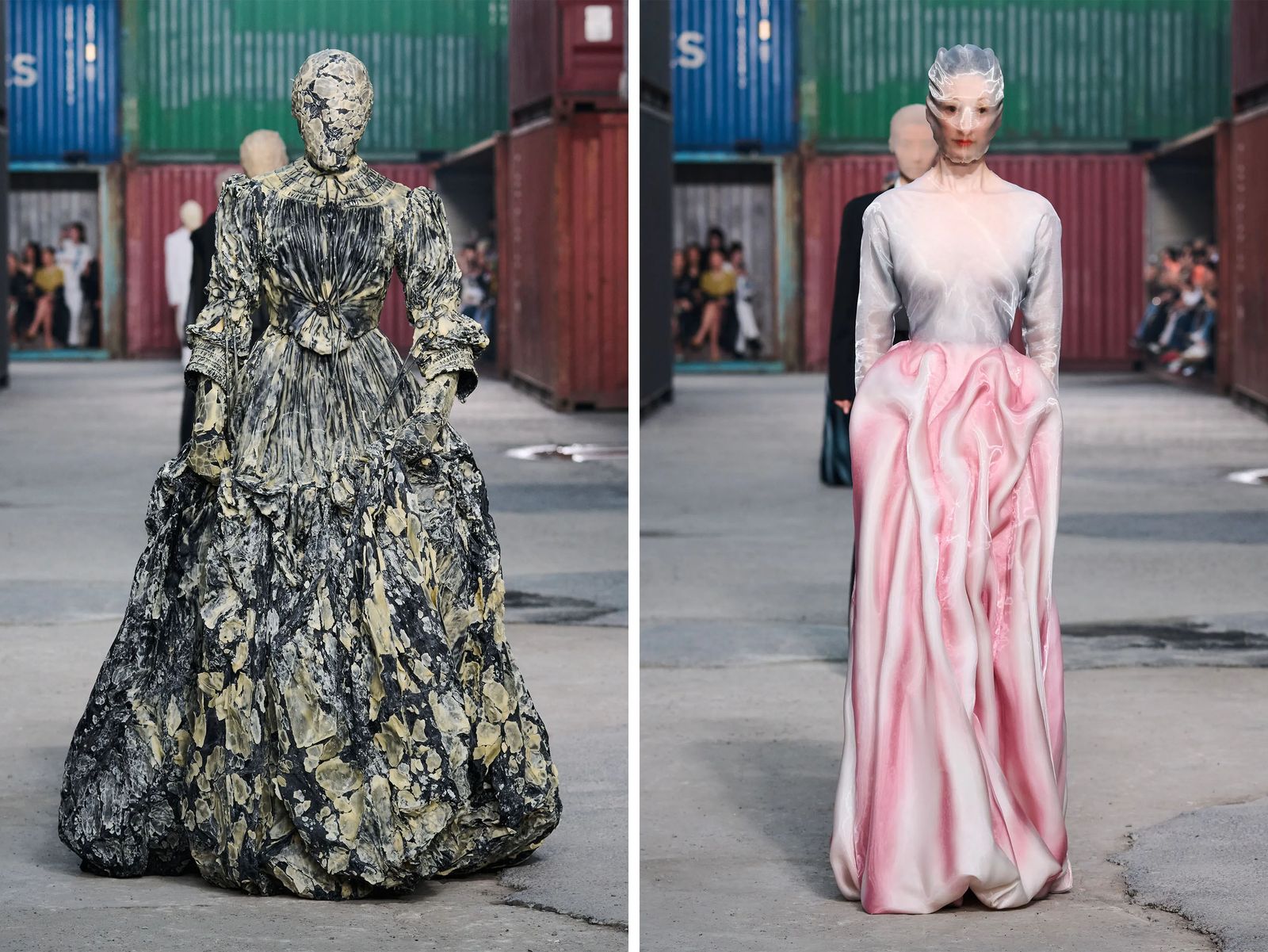
Aesthetically speaking, the pendulum is swinging away from the stripped-down minimalism that has defined recent seasons. Instead there is a more deliberate embrace of sophistication, emotional expression and cultural specificity. Emerging fashion is increasingly in line with domestic consumer sentiment and global fashion discourse.
More striking than any single trend are the changes in attitudes. Shanghai is no longer just reacting to the global fashion system. It begins to operate within it in a more clear and self-defined way.
The following are four key signals affecting the 2026 Autumn and Winter Shanghai Fashion Week.
The End of Clean Fit and the Return of Sophisticated Femininity
After several seasons dominated by “clean” minimalism and understated luxury, Autumn/Winter 2026 marks a clear shift in direction.
The rise of “clean fit” in China over the past few years is no accident. In many ways, it’s a product of the era: a fusion of economic caution, the influence of global luxury codes of “quietness” and the algorithmic aesthetics of platforms like Xiaohongshu and Douyin, where simple, logo-laden clothing has become both desirable and easily replicable.
But that unity has begun to fade. As Ontimeshow founder Yeli Gu observes, the pursuit of restraint has given way to something more expressive: femininity, romanticism and emotional texture are back at the center of the design language.
This observation was echoed internationally. Marine Humeau, merchandise manager at Printemps in Paris, points to a similar evolution, “There was a time, both in the luxury world and in the contemporary market, where everything was minimalist and understated luxury. But I think that’s gone now. We want more authenticity, femininity and romanticism.”